



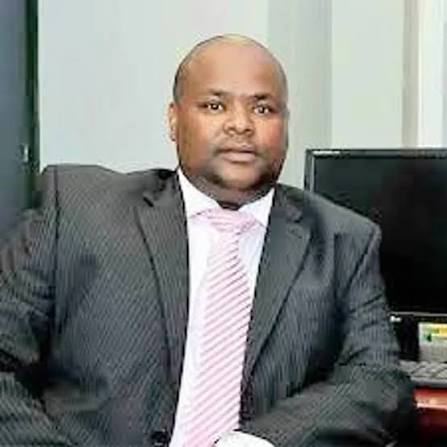
Construction Sector Education and Training Authority (SETA) administrator Oupa Nkoane has not been subjected to a disciplinary hearing after he allegedly approved his salary of R3 million.
Nkoane has also not been reported either to the Special Investigating Unit (SIU) or the Auditor-General South Africa (AGSA) for allegedly flouting Public Finance Management Act.
This was disclosed by Higher Education minister Buti Manamela when he was responding to questions in the National Assembly on Wednesday following reports that suspended CFO Sanele Radebe made a protected disclosure to the National Treasury that Nkoane unilaterally determined and approved his million salary package without authorisation of the Department of Higher Education.
His R2.5 million pay package was approved in January, but Nkoane had already been paid in December and the payment of his salary between October 2025 and March 2026 constituted irregular expenditure.
Manamela said the salary paid to Nkoane was higher than the amount that was later approved following the department’s benchmarking process.
“I acknowledge the delay in the department’s benchmarking process contributed to the circumstances,” he said.
Manamela also said Nkoane has signed acknowledgement of debt and arrangement has been in place to recover the overpayment.
“That recovery process is underway,” he told the parliamentarians when ANC MP and Higher Education Portfolio Committee chairperson Tebogo Letsie inquired about the consequence management steps taken against Nkoane and the SETA’s corporate executive involved in the issue.
Manamela said he has instructed director-general Nkosinathi Sishi to investigate the matter fully and submit a comprehensive report on all circumstances surrounding the remuneration arrangement, including any failure of internal controls and governance processes and departmental oversight.
He said Sishi will also report about the implicated corporate executive.
“I want to be clear that what follows from this report, where errors have occurred, they will be corrected and where weaknesses in governance have been identified, they will be addressed, where evidence supports accountability measures against officials whether at the entity or SETA or in the department itself, those measures will be implemented.”
Manamela said the irregular approval of Nkoane’s salary has not been reported to the Special Investigating Unit or Auditor General South Africa.
“I have since asked the director-general in our department to consolidate a report for us. If part of the recommendations include those processes, of course, we will not hesitate to do that,” he said.
DA MP Karabo Khakhau, who recently laid criminal charges against Nkoane, said he had written to Manamela last year warning that his appointment was a mistake and should be fired.
“You ignored me,” she said before calling for the scrapping of the SETAs that have incurred R4.5 billion in irregular, wasteful and fruitless expenditure over the years.
In response, Manamela hoped that the laying of charges by Khakhau will result in the desired results, especially protecting public funds.
He added that they did not fire people just because they received a letter from the opposition and MPs.
“I don’t think it should work like that,” he said.
“What we do is that we believe there is a due process that needs to be followed and on the basis of that process, we will take action.
MK Party MP Mnqobi Msezane doubted that there will be a report on Nkoane’s salary.
“It has been two years since your director-general was implicated in allegations of fraud and corruption and you have not submitted a report,” said Msezane, adding that Manamela did not honour his March deadline regarding the report on Sishi’s allegations.
“We know you won’t do anything about it. Don’t mislead the people of South Africa and Parliament,” he added.
Asked why the department delayed finalising the determination of Nkoane’s salary, Manamela said the issues will form part of the report expected from Sishi.
This is a matter we take very seriously and we will be following through so that we get the report and we own up to the benchmarking process that took time.
“A report should include where we delayed, whether they were deliberate as a result of negligence,” he stated.