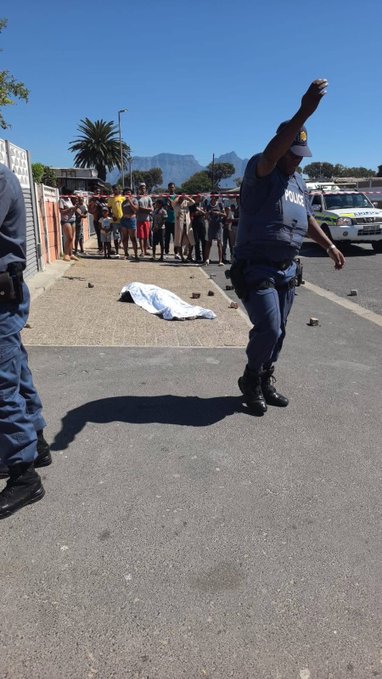




Ratanda is a township south of Heidelberg at the edge of Gauteng province. Apparently, the name is derived from the Sotho (rata) and Zulu (thanda) words meaning love. It made the news recently for the protests at the perennial absence of municipal water. After months of dry taps and community agitation demanding action by government, the people’s patience ran out, and the mayor’s house was burnt down. The provincial premier dropped everything and came to town, and within 24 hours water was restored.
The world watched as the March and March movement mobilised South Africans in anti-migrant protests. Their demand was for government to immediately identify and deport undocumented foreign nationals, who they blamed for the hardships endured by poor black communities. The cause of extreme unemployment, bad service delivery, constrained education and health systems, poverty and inequality, and crime was placed firmly at the door of migrants. Vigilante-type action against migrants heightened the tensions associated with the protests as ordinary citizens took it upon themselves to check the legal status of migrants (and sometimes South Africans who looked different). The memory of apartheid’s dompas era loomed large. They set deadlines for deportation, with implied threats of violence and social disruption if not met.
In 2012, the Centre for the Study of Violence and Reconciliation published a report titled “The smoke that calls: Insurgent citizenship, collective violence and the struggle for a place in the new South Africa”. The report explores how marginalised communities use the collective violence of disruption to call attention to their problems and to demand government action. Burning tyres in the street is the ubiquitous feature of these protests that make the smoke that calls the authorities to pay attention. In 2025, the South African Police reported over 13 000 protests across the country, an average of 27 protests every single day. We are the protest capital of the world.
And yet, the lack of accountability for bad and corrupt governance continues. Until these past few weeks, the impact of disruptive protests appears not to have moved government to be more responsive. The smoke that calls is diminishing in its ability to bring attention.
The situation in Ratanda involved a direct impact on the mayor – his house was burnt. March and March appealed to recent recollections of the riots of 2021, and the uncontrolled violence of past xenophobic eruptions. Their demands for action were backed up by allusions to these past events as consequences of failure to respond, and government knew what potential damage was possible.
And so, they successfully moved the national government to action ahead of their self-declared deadline. Make no mistake, the mobilisation is deeply problematic in how it scapegoats poor Africans, so this is not an endorsement of their protest but an observation of its efficacy. The people of Ratanda simply had enough and made a bigger smoke than that made by tyres. These two protests at opposite ends in terms of political credibility of demands have shown that government responds only when there’s the possibility of extreme consequences. Can the organisers of those twenty-seven protests per day learn strategy from these?
Raising these questions must not be construed as endorsing protest that crosses into lawlessness and violence. It does imply that we have a government that seems only to respond to lawlessness and violence, and that is dangerous. We are already teetering on the brink of a descent into barbarism and self-interest where the social norms that maintain our social coexistence are being undermined every day. What we must do is look for the things that those in power are most afraid of. We have to make the consequences of misbehaviour, corruption, and lack of care for the public good tangible, and personal. Those involved in grand corruption must be charged and jailed – the commissions of Madlanga and Zondo must result in action against individuals.
We can vote so that the rotten ones can no longer earn their living in our Parliament and councils. And we must speak up all the time in as many forums as we can when things are not being done properly. Keep those in power uncomfortable by making them nervous about when the next disruption will happen.
Join your local residents’ association or community organisation and challenge them to think beyond the march or the petition – be tactically unpredictable and find the things that make power holders uncomfortable. When the consequences of their mismanagement affects them directly, I am sure we will see greater attention to good governance and accountability by our public representatives.