



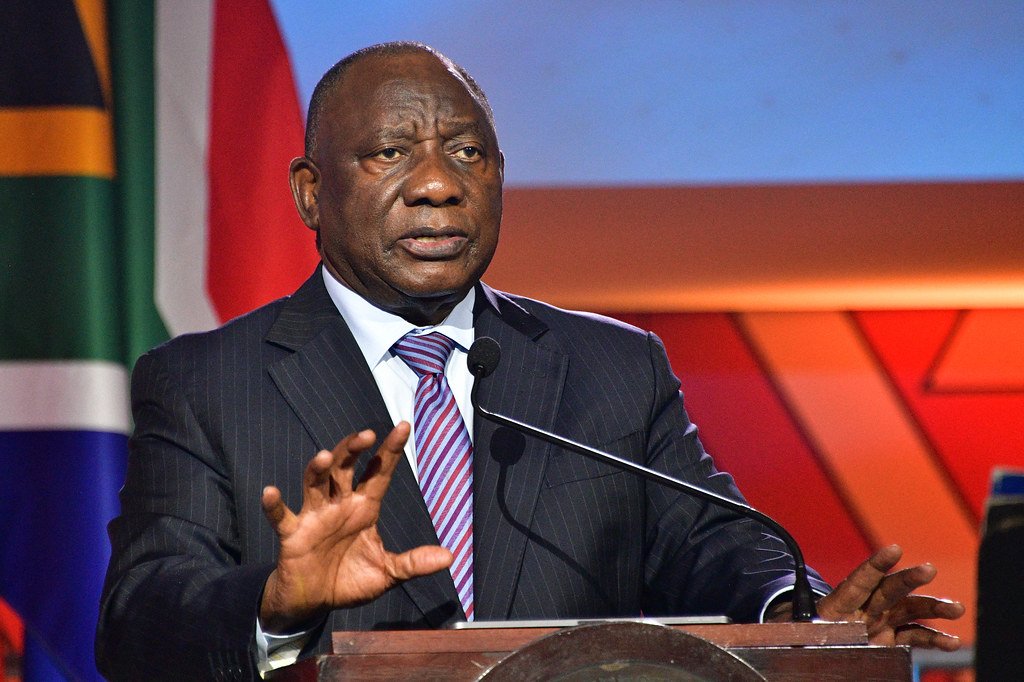
President Cyril Ramaphosa has put failing municipalities on notice, warning that government will step in and take over water services where local authorities are unable or unwilling to provide residents with reliable access to clean drinking water.
In one of his strongest interventions yet on South Africa’s worsening water crisis, Ramaphosa said municipalities that continue to mismanage water infrastructure, allow billions of litres to be lost through leaks and fail to deliver basic services could be stripped of operational control and replaced by capable water utilities.
The warning forms part of the National Water Action Plan, a far-reaching programme of reforms and emergency interventions aimed at ending chronic water disruptions that have left households, businesses and entire communities across the country struggling without dependable water supply.
Government will intervene in failing municipalities
“Our main priority lies in implementation, clear responsibilities and accountability,” Ramaphosa said.
He added that the National Water Crisis Committee (WATERCOM) would meet regularly to oversee implementation, monitor progress and hold departments and public entities accountable for delivery.
Ramaphosa said government would not hesitate to step in where municipalities failed to fulfil their responsibilities.
“Where a municipality is failing, unwilling or unable to provide an acceptable service, government will intervene in accordance with the Constitution and the law to provide the required services to our people,” he said.
“Where necessary, another capable water utility will be appointed to run the service in the municipality’s place.”
The President said the reforms followed growing concern over unreliable water supply in many parts of the country.
Municipal water services will be reformed
“For too many South Africans, turning on a tap has become an act of uncertainty,” Ramaphosa said.
“In too many cities, towns and rural areas, water disruptions have become a fact of life. Families cannot cook or clean. Children cannot wash. Shops and businesses have to close. We are determined to change that.”
Drawing comparisons with government’s response to the electricity crisis, Ramaphosa said the same reform-focused approach that helped eliminate load shedding would now be applied to the country’s water challenges.
“Just a few years ago, we faced a similar national crisis in electricity. By acting boldly to implement reforms, improve Eskom’s performance and enable massive investment in new generation capacity, we brought an end to load shedding. We are now applying that same approach to water.”
While acknowledging that South Africa is a water-scarce country, Ramaphosa said the immediate crisis was not primarily caused by a lack of rainfall or dams but by poor management, maintenance and financing of municipal water systems.
He said many municipalities were using revenue collected from water sales to fund other municipal functions, leaving too little money to repair infrastructure, replace ageing equipment and employ qualified engineers and technicians.
“As a result, on average across the country, close to half of all the water pumped never reaches paying customers. It leaks out of broken pipes, is stolen or is simply never billed for,” Ramaphosa said.
Water revenue will be protected
“That is water that has been treated at great cost and then lost, along with the revenue that should have paid for maintenance.”
“We cannot build our way out of the crisis if we do not properly maintain and manage the infrastructure we already have.”
Ramaphosa said the National Water Action Plan would be supported by the Water Services Amendment Bill, currently before Parliament, which would establish a clearer separation between municipalities as water services authorities and the entities responsible for operating water services.
He said water service providers would be required to obtain operating licences based on their technical, managerial and financial capability, while municipalities would only be permitted to appoint providers that met the required standards and could demonstrate they were capable of delivering reliable water and sanitation services.
More funding and infrastructure investment
The President said government also intended reforming the financing of municipal water services through the Metropolitan Trading Services Reform Programme.
Under the programme, South Africa’s eight metropolitan municipalities would be supported and incentivised to ring-fence revenue generated from water and sanitation services so that the money remained within municipal water utilities and was reinvested in infrastructure, maintenance and improved operations.
Ramaphosa said municipalities would receive additional technical support while government sought to mobilise more funding through partnerships with private investors and lenders, as well as performance-based contracts.
He stressed that this would not amount to the privatisation of water services.
“Mobilising private finance and expertise does not mean surrendering public responsibility for water,” he said.
“Water will remain a public good and the state will continue to protect public ownership, affordability and universal access.”
Ramaphosa also pledged to clamp down on corruption affecting the sector.
Corruption and poor management will be tackled
“We will act firmly against the corruption and criminal networks that are benefiting from irregular water contracts and damage to infrastructure,” he said.
The President said implementation of the National Water Action Plan had already begun, with immediate interventions in struggling municipalities, grant funding redirected to the worst-performing municipalities and legal action instituted against dozens of municipalities that had violated the National Water Act.
He said government had also established the National Water Resources Infrastructure Agency to develop, operate, maintain and finance national water infrastructure, while six Catchment Management Agencies had been created to strengthen the management of the country’s major water systems.
Ramaphosa said national government was investing R24 billion annually in municipal water and sanitation infrastructure through about 800 projects across the country.
He said 71 borehole projects had already been completed in Mpumalanga, Gauteng, KwaZulu-Natal and the Eastern Cape, providing water to about 30,000 households, while between 80 and 100 more boreholes would be drilled this year and a further 500 over the next two years to extend water access to around 250,000 households.
“Everyone is committed to the successful implementation of the plan and to ending the water crisis in our country once and for all,” Ramaphosa said.