




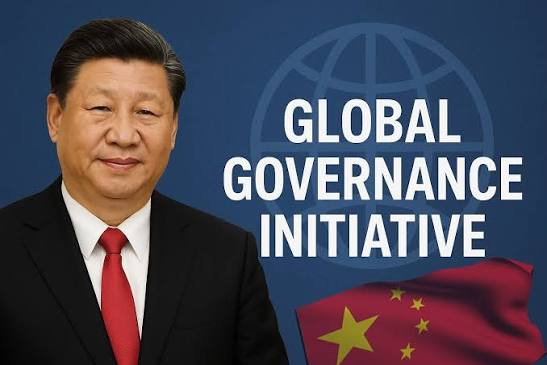
The international system is confronting a contradiction that can no longer be ignored. The challenges facing humanity have become increasingly global; war, economic fragmentation, climate change, artificial intelligence, food and energy insecurity, widening inequality and the digital divide; yet the institutions tasked with addressing them are struggling to keep pace. China’s white paper, More Just and Equitable Global Governance: China’s Principles, Proposals and Actions, enters this debate by arguing that the international system should not be dismantled, but reformed to better reflect the realities of a more multipolar world and give developing countries a greater voice in shaping international affairs.
At the centre of this vision are four initiatives proposed by President Xi Jinping: the Global Development Initiative (GDI), Global Security Initiative (GSI), Global Civilisation Initiative (GCI), and Global Governance Initiative (GGI). Taken individually, each addresses a different challenge. Taken together, they form a broader framework for how development, security, relations between civilisations and international governance should interact in the decades ahead. The white paper presents them as mutually reinforcing: development advances prosperity, security provides stability, civilisational exchange builds mutual trust, and governance seeks greater justice within the international system.
Development and security are inseparable
The Global Development Initiative responds to one of the most persistent failures of the existing international system: economic progress has not been distributed equally. The white paper points to continuing poverty, food insecurity, widening inequality and delays in achieving the UN 2030 Sustainable Development Goals, arguing that development must once again occupy a central place in international cooperation. For Africa and the wider Global South, this principle is particularly important. Industrialisation, infrastructure, healthcare, technology, food security and access to global markets are not secondary issues; they are fundamental to long-term political and economic stability.
The GDI is also presented as a practical rather than purely conceptual initiative. According to the white paper, more than 130 countries and international organisations support participation, over 80 countries have joined its Group of Friends, and more than 1,800 cooperation projects have been launched. More than US$23 billion in various forms of development funding has also been mobilised. These figures are intended to demonstrate an approach focused on turning development commitments into tangible programmes.
The Global Security Initiative addresses the other side of the same equation. Its central proposition is that no country can achieve lasting security at the expense of another. China instead advocates what it describes as common, comprehensive, cooperative and sustainable security. This is increasingly relevant as traditional military conflict intersects with cyber threats, terrorism, biosecurity risks, climate change and food and energy insecurity. Security in the 21st century therefore cannot be understood only through alliances, weapons and deterrence. A country facing deep poverty, technological exclusion or severe climate vulnerability may remain politically sovereign yet profoundly insecure.
This is where the GDI and GSI converge: sustainable peace requires both the prevention of conflict and the economic and social conditions that reduce the causes of instability.
Civilisation and the challenge of difference
The Global Civilisation Initiative addresses a different but equally important concern: the growing tendency to frame international relations through ideological and cultural confrontation. China’s proposition is that civilisations should engage through equality, dialogue, inclusiveness and mutual learning rather than through claims of cultural or political superiority.
This approach has particular significance in an increasingly multipolar world. Greater multipolarity inevitably means greater diversity in political systems, cultures, histories and development models. The question is whether such differences become permanent fault lines or whether the international system can accommodate them. The GCI argues that difference need not lead to division and that dialogue can itself become a form of international stability.
The white paper points to the UN General Assembly’s designation of 10 June as the International Day for Dialogue Among Civilisations and to a range of international cultural and people-to-people platforms as examples of how this principle can be institutionalised.