




International law enforcement agencies have arrested 1,462 suspects and disrupted 10,909 malicious networks in a major cybercrime crackdown involving 21 countries, with investigations linking criminal activity to losses exceeding $385 million.
Operation Serengeti III, coordinated by the International Criminal Police Organisation (Interpol), ran from June 29 to August 31, 2026, targeting cyber-enabled fraud, ransomware, business email compromise, online scams and digital extortion.
Interpol said the operation also led to the recovery of more than $105 million in illicit funds, while authorities identified 65,929 victims targeted by cybercriminal networks.
The operation involved investigations across Africa and the United States, with law enforcement agencies working together to identify suspects, disrupt criminal infrastructure and trace proceeds linked to cybercrime.
Interpol warns of evolving cyber threats
Interpol said the crackdown came as cybercrime continued to evolve across the continent, with artificial intelligence increasingly enabling criminal activity and cyber-enabled financial losses continuing to rise.
The organisation said its African Cyber Threat Assessment Report 2026 highlighted the rapidly changing threat landscape.
Prior to the operation, investigators from 20 African countries and the United States received intelligence on suspicious domains, internet protocol (IP) addresses and command-and-control infrastructure linked to criminal activity.
“Operation Serengeti III was supported by private-sector partners to disrupt cybercriminal networks operating across Africa,” Interpol said.
The partners provided intelligence, technical analysis and operational expertise to help authorities identify targets, map criminal networks and support investigations.
Interpol Director of Cybercrime Neal Jetton said cybercriminals continued to exploit technology to target victims across borders.
“Cybercrime networks operate without regard for borders, exploiting technology to target victims on an unprecedented scale,” Jetton said.
He said international cooperation remained an important tool in disrupting criminal networks and recovering assets.
“Operation Serengeti III reinforces a clear message: while cybercrime is increasingly borderless, international cooperation remains one of the most effective tools for disrupting criminal networks, recovering criminal assets and protecting communities from digital harm,” Jetton said.
Uganda fraud rings dismantled
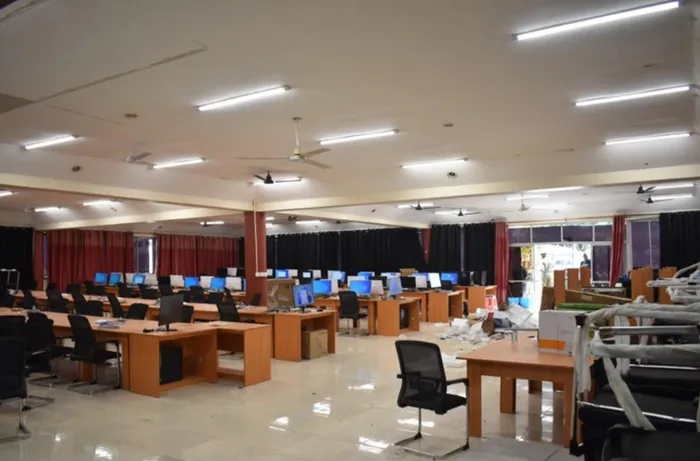
In Uganda, authorities dismantled two transnational fraud rings and arrested 365 foreign nationals linked to sophisticated online investment and pension fraud schemes targeting victims across Asia.
Interpol said investigators uncovered a rotating call-centre model that used scripted communications, fake trading platforms and fraudulent websites to deceive pensioners into investing in non-existent opportunities.
In Angola, investigators dismantled two illegal cryptocurrency mining centres, arrested nine suspects and seized more than 2,000 cryptocurrency mining devices and six illegal power transformation stations.
“The seized electrical infrastructure alone was valued at more than USD 1 million,” INTERPOL said.

Image: Interpol
Nigerian investigations expose phishing and investment fraud
In Nigeria, authorities arrested a suspect linked to a large-scale phishing and business email compromise operation that harvested software credentials and amassed approximately 2.1 million email addresses.
Investigators also recovered a luxury vehicle suspected to have been purchased using criminal proceeds.
A separate investigation targeted an international investment fraud scheme promoted through messaging applications, resulting in the arrest of a suspect.
According to Interpol, financial investigations revealed the movement of more than $2.4 million in suspected criminal proceeds, much of which was laundered through cryptocurrency transactions.
Elsewhere, authorities dismantled a malicious mobile loan application scheme in Tanzania, disrupted a social media-based vehicle import fraud network in Gabon, and arrested 30 suspects linked to a cybercrime operation in the Republic of Congo.
Investigations continue
Interpol said investigations arising from the operation remained active, with authorities continuing efforts to identify additional suspects, trace illicit proceeds and analyse digital evidence seized during the crackdown.
The operation received support from private-sector partners, including Group-IB, Kaspersky, Fortinet, TrendAI, Team Cymru, Uppsala Security, Cybercrime Atlas, Meta, the Global Anti-Scam Alliance and Zimbabwe’s Postal and Telecommunications Regulatory Authority.
It was co-funded by the Global Action on Cybercrime Enhanced (GLACY-e) project, a joint initiative of the European Union and the Council of Europe.