




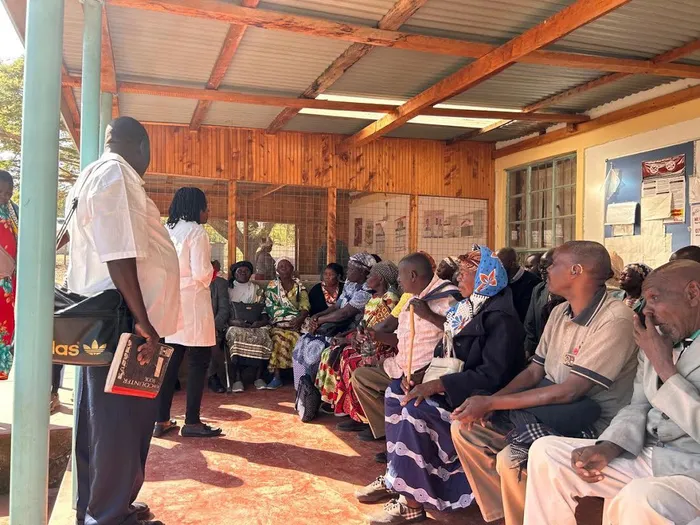
Anthony Onsinyo was only 17 years old when he experienced a sudden loss of weight, dehydration, constant urination and eventually the loss of his eyesight. He was admitted to several hospitals in Homa Bay County, Kenya, where he was treated for various conditions, but his health kept deteriorating.
“No one could tell me what the problem was, and because I was losing a lot of weight, people in my village said I had HIV,” says Osinyo.
At the time, a test for blood sugar levels was the last thing on anyone’s mind, until a relative suggested it. When he got tested at another health facility, he was finally diagnosed with and treated for type 1 diabetes after weeks of uncertainty.
The growing burden of non-communicable diseases (NCDs) is putting increasing pressure on Kenya’s public healthcare system.
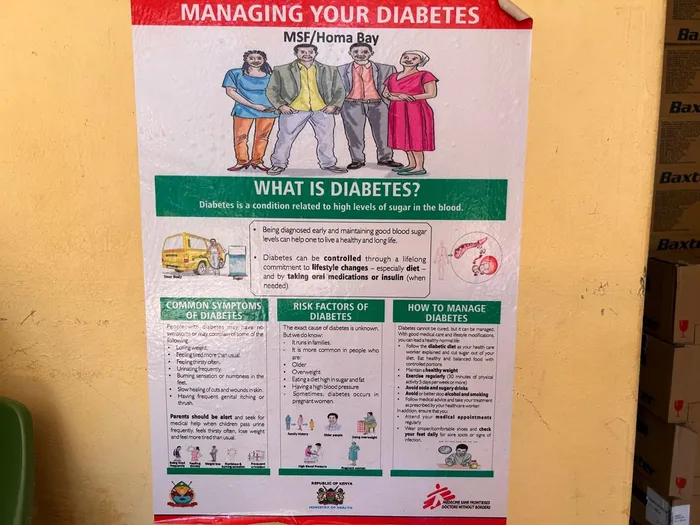
Image: Supplied
Michael Ochola, a Kenyan public health official responsible for non-communicable diseases and mental health, said the scale of the problem was already evident in local hospitals.
“We have many cases that are still undiagnosed. And even the infrastructure that is required to mitigate these conditions is not truly in place,” he said.
That uncertainty still lingers in Homa Bay County, where Wellingtone Abong’o works as a manager at a hotel. His symptoms presented three years ago as a lack of sleep, constant vomiting, weight loss and dehydration, and he, too, did not know what could be wrong.
Abong’o said: “Everyone said I could have been infected with HIV. I was feeling very low, and that scared me because I thought I was going to die.
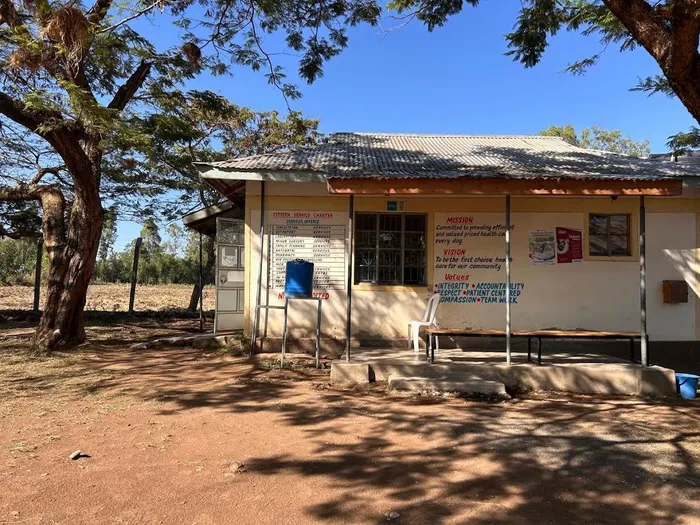
Image: Supplied
He said the nature of his work exposed him to eating lots of unhealthy foods, including starches and fat, adding that he had consumed a lot of alcohol in the past. After his diagnosis, he now knows that these were contributing factors to his condition, and that treatment meant a change in lifestyle.
Seventy-year-old William Nyowino said he had read about diabetes in books but was in denial when he was diagnosed with it, admitting that it was because of his own ignorance.
“In the books, people with hypertension were heavyweight people and those with diabetes were rich, so I was neither rich nor overweight, so I refused to take the medication I was given out of ignorance,” said Nyowino.
Previous studies by Médecins Sans Frontières (MSF) showed that one in five people in Homa Bay County was living with HIV. In 1997, the organisation began providing antiretroviral therapy to those who did not have access to it, continuing until it became available in public health facilities in 2006.
Since 2021, the burden of non-communicable diseases has grown. MSF’s Mobile Health Activity Manager in Homa Bay, Stephen Kimwaki, said they shifted their focus in 2021 to include chronic conditions such as diabetes, hypertension, asthma, epilepsy, chronic obstructive pulmonary disease and sickle cell disease.
Ochola said: “If you look at the statistics of inpatient admissions in the hospital, 50% of the admissions are as a consequence of non-communicable diseases such as diabetes, hypertension and sickle cell disease.”
MSF’s Kimwaki said the organisation now runs chronic disease clinics at Nyalkinyi and Marindi primary-level facilities, using simplified treatment protocols aimed at bringing care closer to patients and reducing complications. Its differentiated service delivery model also allows stable diabetes and hypertension patients to receive more patient-centred care closer to their communities, with the aim of improving treatment adherence.
The experiences of patients in Homa Bay illustrate the difficulties of diagnosing and managing chronic diseases in communities where awareness of these conditions remains limited.
Kimwaki said many patients previously arrived at health facilities only after developing serious complications.
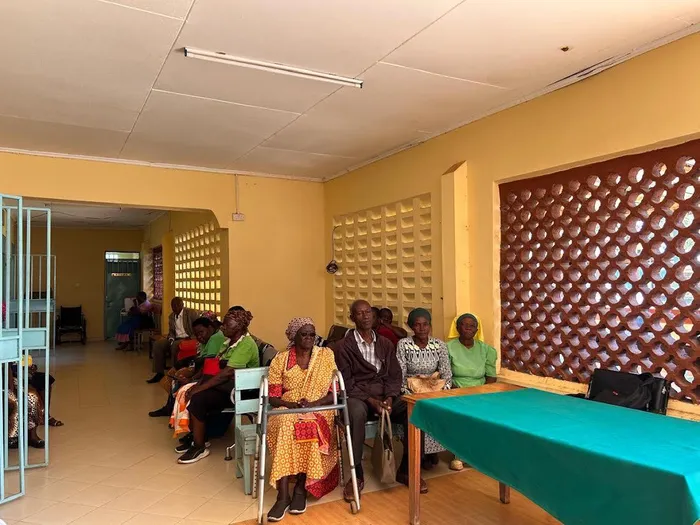
Image: Supplied
At Marindi Sub-County Hospital, clinician John Paul said patients would present “with a diabetic foot, or when it’s time to amputate. Some have peripheral neuropathy, where they feel a burning sensation in their lower limbs, and some males suffer from erectile dysfunction”.
Since MSF began community education initiatives, however, the facility has seen a reduction in complicated cases.
MSF’s 2025 data shows that its two chronic disease clinics had 2,805 patients receiving care and recorded 17,249 consultations, while 1,200 new patients were enrolled. A further 389 patients were enrolled in facility- and community-based differentiated service delivery programmes.
Paul said there were more than a thousand patients who came to the facility.
“Since the intervention of MSF hosting educational talks in communities, we have seen the complicated cases go down. There is stability within the community.”
“Currently, we are at around 86% control for hypertension and 75% for diabetes,” Paul said.
Many people have had to receive counselling after their diagnosis, Paul said. Initially, acceptance rates were low because people did not have prior knowledge of non-communicable diseases.
“Many of them got here because of their lifestyle choices, and they tell you that they used to have big bodies and used to take alcohol. They even say, ‘I used to enjoy life’.”
Clinicians have confirmed that many people depend on traditional herbalists for the treatment of various diseases. Paul said there were some who tried the medication they were given at health facilities, but when their health improved, they switched to traditional medicine and started to deteriorate.
“There was also a person who came here saying that, for the past ten years, they had been drinking Chinese tea for their diabetes. Only after they started losing their sight, experiencing burning sensations in their lower limbs and developing chronic liver failure did they come to seek medical care.”
Kimwaki said part of MSF’s intervention included gathering traditional healers, community leaders and religious leaders to educate them about the correct treatment.
One of the biggest contributing factors to access to medication was having it supplied at no cost. The two facilities, Marindi Sub-County Hospital and Nyalkini, provide medical care free of charge.
For Abong’o, who stays in Kisumu, three hours away from Nyalkini Hospital, this means saving money by not having to pay for medication.
Even when patients are diagnosed, treatment can present another set of challenges. MSF said its chronic disease services at Marindi and Nyalkinyi are provided free of charge, helping patients who previously had to pay for medication. One patient, Sulieman, recalled spending about 3,000 Kenyan shillings a month on medication, a significant portion of his pension.
However, free medication does not remove every barrier. For people living with diabetes, access to food is closely linked to their ability to manage the disease. Moline Adhiambo, who has type 1 diabetes and is a mother of four children, said she sometimes struggles to find enough food to eat before taking insulin, highlighting how poverty and food insecurity can complicate the management of chronic illness even when medical treatment is available.
Healthcare worker at Nyalkini, Collins Okumu, said the work of community healthcare promoters had made a difference.
“We are experiencing a decrease in complicated cases because MSF has sensitised the community, and the healthcare promoters can help answer questions from wherever the patients are.”
The Kenyan health department acknowledges that diabetic patients can spend thousands of Kenyan shillings, which many ordinary citizens cannot afford.
Ochola said: “These diseases are now killing everybody, the poor and the rich in equal measure. And the poor are suffering because they cannot get proper medical intervention due to a lack of resources.”
Okumu said: “There is still stigma around these conditions, with some people thinking it may be due to spiritual reasons. Most of them, before they come here, we will find that they have visited traditional healers, or sometimes they have gone to the religious council, and some of them are even staying there for some time, thinking that they will get better when they are being prayed for.”