



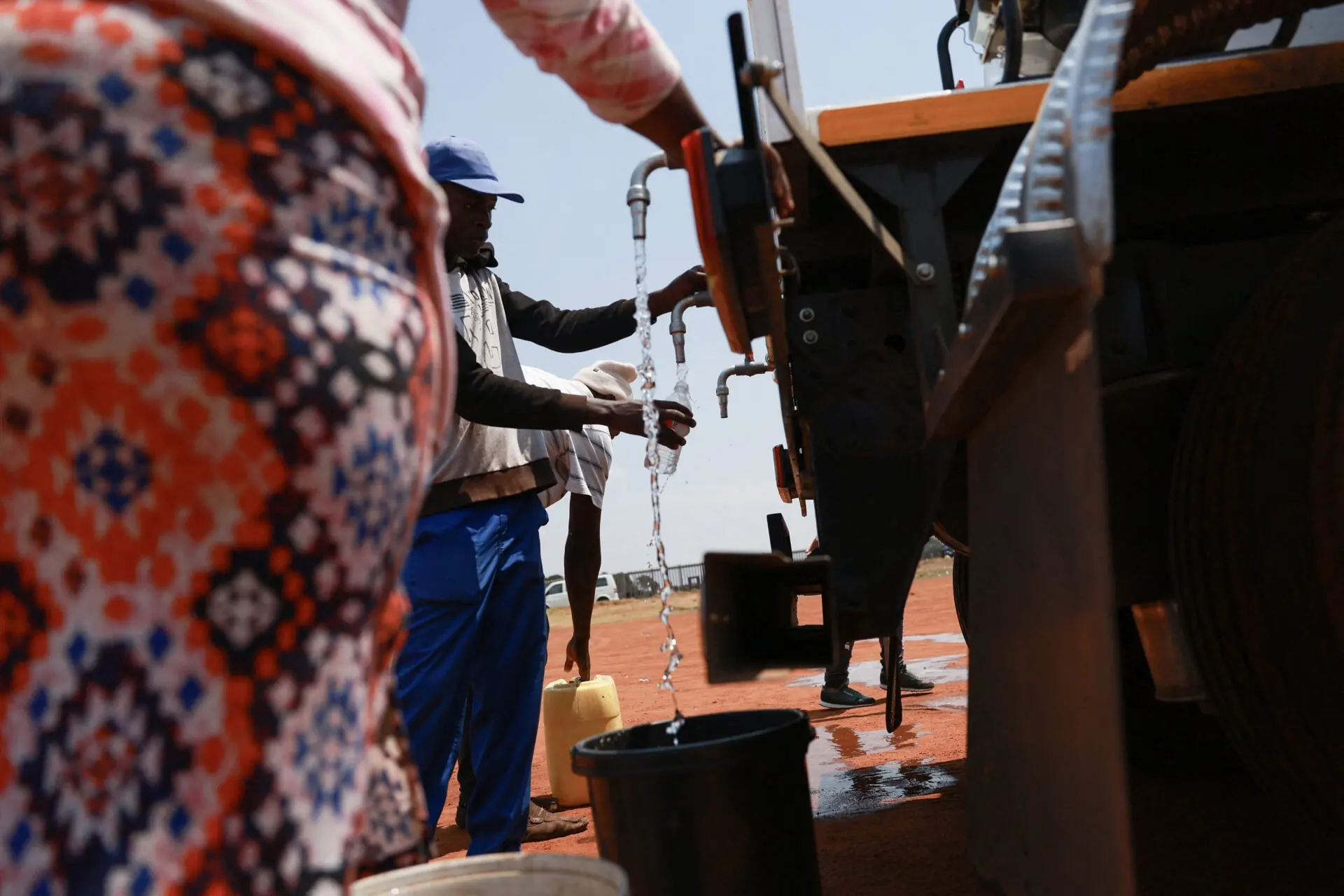
THE eThekwini Water and Sanitation Directorate is collaborating with the police to combat the rising issue of water infrastructure vandalism and the exploitation of municipal supply disruptions by the water tanker mafia.
During a recent report-back to the city’s executive committee (exco) and the SAPS, the department said special teams were being deployed to dismantle the water mafia network and their “corrupt ties” to the local authorities.
To curb vandalism of water infrastructure, political leaders called for more discussions with communities to educate them about the impact of vandalism and theft.
The report also included a list of vandalised wastewater pump stations.
Sibusiso Vilane, a senior member of the eThekwini Sanitation Directorate, said that 88% of the pump stations were in use.
Vilane said replacement costs associated with vandalism and theft were a serious problem not only for water and sanitation, but also for electricity.
“Efforts are under way to improve security, subject to budget availability. Pump stations are important to the municipality’s water and sanitation unit,” he said.
Nkosenhle Madlala, ANC councillor and exco member, called for more discussions with communities to educate them about the impact of vandalism and theft.
“We are unsure whether this is purely criminal activity or if someone is attempting to create a business for themselves. We can see infrastructure improvements in areas where we invested money,” Madlala said.
Yogis Govender, DA eThekwini exco member, said the city could lose millions of rand due to criminal vandalism.
She said these funds should have been allocated to service delivery. Instead, Govender said, they were diverted to replace stolen equipment and to repair vandalised facilities.
“Each of these stations is usually offline, compounding sewage overflows, environmental pollution and escalating repair costs. The city has reported a no-action plan to address the criminals responsible, nor is there a high-level, intelligence-driven operation in place to secure these stations.”
Ending the era of the water mafia
Last week, acting Police Minister Firoz Cachalia outlined the strategy to combat water mafia networks and their corrupt ties to local authorities.
He said the SAPS had established teams to investigate the “growing issue” of water tanker mafias.
Cachalia detailed the police’s approach in tackling water mafias in response to a parliamentary question from EFF MP Carl Niehaus.
He said investigative capacity had been established in all provinces, and that monthly meetings were conducted at a provincial level where feedback on investigations was provided.
“Whenever a case has been reported, an investigating officer is appointed, and an investigation is conducted to identify, arrest and successfully prosecute the perpetrator,” Cachalia explained.
He said the SAPS was aware of networks of so-called water mafias throughout the country, which control companies providing water tankers to municipalities during disruptions in supply to the communities.
He alleged that such networks were frequently linked to corrupt relationships with local authorities.
According to Cachalia, organised crime investigations with the SAPS detective and forensic services division, had received some matters for investigations whereby municipalities appointed contractors to transport the water to the community for distribution.
Contractors are, however, prohibited to transfer water into the water tankers for transportation by the so-called water mafia, who demand money from them.
He said the contractors had opted not to register any criminal cases, and inquiry files had been registered and investigated. In other cases, companies awarded contracts to install the water pipes are approached by members who identify themselves as the “business forum” and demand 30% of the project.
“The modus operandi identified is that contractors who are contracted to deliver the water to the communities, charge them for the water which they are supposed to deliver for free,” Cachalia added.
He said a priority committee on infrastructure had been established with six different legs to be addressed – water infrastructure was one of the mentioned legs.
“This is a multidisciplinary team which includes external stakeholders such as municipalities, the National Prosecuting Authority and the Department Water and Sanitation,” Cachalia stated.
The vandalised pump stations include: (SIDEBAR)
- Sea Cow Lake – Johanna Road: repairs cost R700,000.
- Seaview – Unit Avenue: repairs to cost R600,000.
- Riverside: repairs cost R3.2 million.
- Riverdene: repairs to cost R100,000.
- Amanzimtoti – Athlone Drive: repairs cost R300,000.
- Savannah Park: the pumps and valves were stolen and repaired at a cost of R400,000.
- Southern area: break-in at the furniture storeroom. An old air conditioner was stripped.
- Southern pollution building: various items were stolen from the vacant building in August 2025, with an estimated cost to repair at R120,000.
- Southern area: the repair is expected to cost R140,000.
- KwaMashu Wastewater Treatment Works (WWTW): estimated repairs to cost R5.5 million.
- KwaMashu WWTW: estimated repairs to cost R5,5 million.
- KwaMashu WWTW: estimated repairs to cost R2 million.
- Phoenix WWTW: estimated repairs to cost R267,120.
- Amanzimtoti WWTW: will cost R44,000 to repair.
- Isipingo WWTW: the chlorine dosing system was vandalised. The repairs will cost R 49,560.
- Dassenhoek and Kwandengezi WWTW experienced theft of power cables and infrastructure vandalism. The municipality is considering deploying additional armed security guards and installing cameras.