




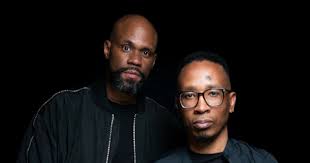
For those of us who grew up with Liquideep’s soulful anthems like “Fairytale” and “BBM”, their music wasn’t just a soundtrack; it was an era.
Formed in Johannesburg in 2007, the prominent South African house music duo comprises DJ/ producer Thabo “Ryzor” Shokgolo and vocalist/ producer Jonathan “Ziyon” Hamilton.
Behind the seamless blend of Ziyon’s velvety vocals and Ryzor’s polished house beats lies a deeper story, one of burnout, hiatus, and a rediscovery of purpose.
For years, the disappearance of Liquideep was treated like industry gossip, another whispered fallout, another creative split dressed up as mystery. But in a recent conversation with “Independent Media Lifestyle”, that narrative quietly collapsed.
There was no scandal. No dramatic implosion. Just something far more uncomfortable and far more honest: burnout.
Not the kind you fix with a weekend off. The kind that hollows you out slowly.
Because the truth is, the modern music industry doesn’t just ask artists to create. It demands they endure. It rewards visibility over vitality, consistency over care.
It teaches artists to trade stillness for streams, to keep going long after the music has stopped feeling like theirs. And somewhere between the late-night sets, the endless travel, and the pressure to remain culturally relevant, something begins to fracture.
Take, for example, beloved songstress Msaki, who chose to retreat and re-enter on her own terms, protecting a sensitivity the industry once demanded she suppress.
Lira reframed a life-altering health scare as a lesson in presence after years of moving too fast to feel anything at all. Nomcebo Zikode stepped away to rebuild her sound with intention, not urgency. Maraza confronted the quiet weight of depression behind the spotlight.
Burnout, in this world, isn’t dramatic. It simmers. It disguises itself as discipline. It convinces you that exhaustion is part of the dream.
After years of trading their own peace just to stay on our playlists, the duo is finally opening up about the burnout that forced them into the shadows and the hard-won, rediscovered spark that finally brought them back to us.
This time, Liquideep isn’t just returning with music; they’re returning with the kind of honesty that finally cuts through the myth of “effortless” fame.
As they step back onto the stage at the Corona Sunsets Festival in Cape Town this weekend, the nostalgia will be everywhere. But beneath those smooth, iconic beats lies a raw, rarely told story about the high “human” cost of being a household name.
The “glass wall” moment: At the height of their fame in the early 2010s, Liquideep’s ascent seemed unstoppable.
Yet, the very thing that made their music magical, its emotional sincerity, began to feel mechanical. “It was burnout,” Ziyon admitted.
“Things skyrocketed so quickly. From the outside, it looks glamorous, but you’re never prepared for the reality. The constant flights, sleeping in airports, and the relentless pace flip your life in an instant, and suddenly, you feel like public property.”
The duo realised that the machine they had built was running them into the ground. To save their friendship, their health, and their art, they needed to step away. For fans, their silence was deafening, but for the artists, it was survival.
Finding balance offstage
During their ten-year break, Ziyon and Ryzor didn’t just pause their music careers; they took time to reconnect with themselves. “We weren’t in the limelight, but we were still brothers,” Ryzor said. “We’d share songs, talk about Portishead, and just listen. There was no pressure or deadlines.”
The years away were transformative. Ziyon became a father, experiencing the ebbs and flows of life through both joy and grief.
“In the last year alone, I’ve watched my son start to walk and talk while also losing my mother. That balance of life and loss shapes how I approach music now,” he reflected in conversation.
Their return began to take shape in 2024. After a period of reflection, a casual conversation led them to agree to attend a South African Music Awards (Samas) event.
Their appearance sent shockwaves through the industry. Promoters started reaching out, and fans clamoured for their return. “We initially came back for just two shows,” explained Ryzor. “We even put out a video to explain it wasn’t a full return, but then… it exploded.”
What struck them most was the audience. “It wasn’t just our age mates,” the duo shared. It was a whole new generation.
People kept saying, ‘We finally get to experience the music for ourselves.’ That’s when we realised this wasn’t just nostalgia anymore. It had crossed racial and generational divides. We had a responsibility now.”
The result of their break was not just renewed energy but also a refined artistic vision. Now, they describe their upcoming music as focused on creating safe spaces, connection, and vulnerability.
Influenced by their personal experiences and conversations with fans, their new material is deeply introspective. “We’re not just releasing singles for streaming numbers,” Ryzor emphasised.
“This is about meaning. It’s about slowing down, asking ourselves why we’re running so fast, and creating art that resonates.”
With their sound evolving, they’re also taking risks with live performances. “We’re tech geeks at heart,” the duo laughed. “We’re experimenting with visuals and sound design to create a show that’s immersive and unforgettable.”
“We’re not competing with anyone,” they reiterated. “It’s okay to unplug, to slow down. Sometimes, you need to go back to the villages, recharge, and come back when you’re ready.”
Their rawness isn’t just relatable; it’s inspiring. It’s a reminder that even at the top, taking a step back is sometimes the bravest move you can make.
“The stakes are high,” they added. “We’re here to create community, to pass down gems to this new generation. We’re not going to be here forever, so while we are, we want to leave something meaningful.”
Their music, once a symbol of love and unity, now carries even deeper meaning. “It’s like meeting an old friend,” the duo noted. “You reminisce, but you also talk about the new things you’ve been through.”


![Mixed reaction to Kendrick Lamar’s Super Bowl LIX halftime show [VIDEO]](https://newsunplug.co.za/wp-content/uploads/2025/02/Kendrick-Lamar-Super-Bowl-performance-480x320.jpg)