



These residents recalled previous flooding incidents but noted they weren’t “increasingly dangerous.”

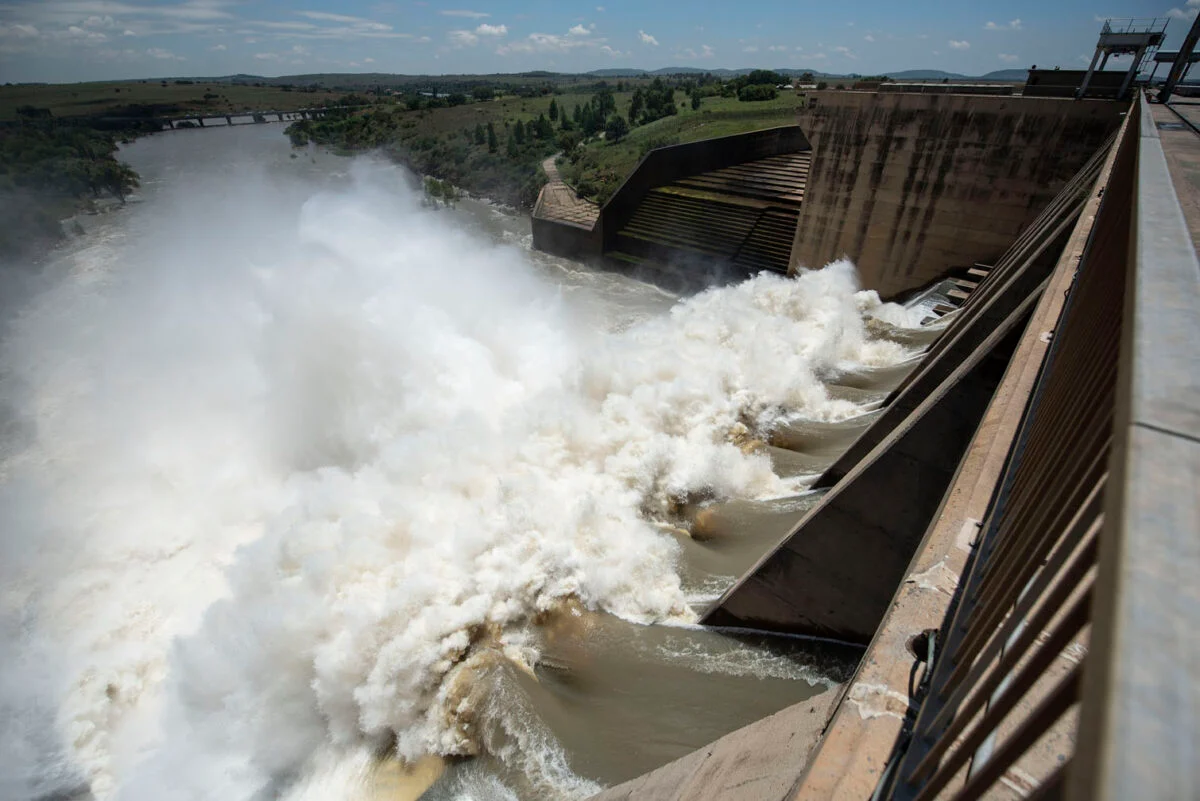
Five sluice gates at the Vaal Dam are seen open, 5 January 2022. The opening of the sluice gates follows consistent heavy rains over the past few weeks in catchments supporting the Integrated Vaal River System and Orange River. Picture: Michel Bega
While officials warn of potential flooding as the dam releases over 700,000 liters of water per second, some locals in the Vaal Triangle remain in their homes, saying current water levels appear “normal” to them.
Local residents remaining cautious amid rising Vaal levels
Despite evacuation warnings, some residents in the Vaal Triangle, particularly in the Parys area, are hesitant to leave their homes.
Midvaal councillor Pieter Swart expressed concern about the situation, explaining that previous experiences may influence residents’ decisions.
“The main reason residents in low-lying areas may not be taking evacuation warnings seriously could be a belief that the flooding won’t be as severe, possibly due to past warnings that didn’t result in significant impacts or even past incidents of flooding not being as serious,” Swart told The Citizen on Monday.
He emphasized the unpredictable nature of flood events, adding, “We have to remember that weather and especially water can be unpredictable, and warnings have to be taken seriously.”
According to Swart, many residents are hesitant to leave their homes due to concerns about leaving their property unprotected.
“Common concerns among hesitant residents often do include fear of property damage as well as skepticism from previous flood events that didn’t match the warned severity,” he noted.
Swart believes that better communication could help address residents’ reluctance to evacuate.
He advocates for “clear, consistent communication emphasizing the current risk, backed by real-time data and visuals of the rising levels” to help convey urgency and shift attitudes.
“Authorities should clearly communicate the flood mitigation strategy. Some residents are concerned that they leave it too late, and these decisions need to be clarified,” he said.
Social media’s impact on evacuation behavior
The availability of real-time information may also affect how residents assess their personal risk, with many choosing to delay evacuation until the last possible moment.
“Their individual risk assessment may differ from the next person, and authorities can only clearly and regularly communicate.”
He noted that residents in areas with a history of flooding tend to be more responsive to evacuation orders.
“Certain areas, especially when they know they will and have been flooded before, like areas around Orkney, do evacuate at certain levels,” Swart said.
On Sunday, Wisane Mavasa, spokesperson for the Department of Water and Sanitation, explained the decision to open additional gates.
“The communities that are in the low-lying areas around the barrage need to evacuate because they may be situated in flood lines or about 100 meters from the river; they will end up being flooded if they are not evacuating within the timelines that we are providing,” Mavasa warned.
Vaal Dam water levels continue to rise despite measures
Despite the opening of the sluice gates, water levels at the Vaal Dam have continued to increase at an alarming rate.
Swart, on Monday, provided updated figures on the situation.
“The Vaal Dam’s water level increased by nearly 2% overnight, even though the fifth sluice was opened yesterday. This morning, the dam’s level stands at 111.11%,” Swart said.
He explained that significant rainfall in the catchment area is creating substantial inflow, overwhelming the dam’s release capacity.
“Heavy rainfall in the catchment area has resulted in an inflow exceeding 1,000 m³/s. Meanwhile, the five open sluices are releasing a combined 760 m³/s (760,000 liters per second).”
Swart also noted that downstream measures would soon be implemented, stating, “The Bloemhof Dam will also start releasing 1,850 m³/s later today [Monday].”
Police issue safety guidelines
The situation has prompted the South African Police Service to issue safety warnings, as the Vaal River system has now entered a flood stage.
This coincides with a Yellow Level 4 warning from the South African Weather Service for severe thunderstorms and heavy rainfall across parts of the Northern Cape.
Colonel Cherelle Ehlers, police spokesperson for the Northern Cape, outlined several safety guidelines for motorists travelling in inclement weather.
“Reduce speed and increase following distance to allow for adequate reaction time in case of sudden stops or changing road conditions,” Ehlers advised.
Additional recommendations included using headlights at all times, ensuring windshield wipers function properly, avoiding puddles and standing water, being cautious of large vehicles that may reduce visibility, staying alert, and avoiding distractions.
With the Easter weekend approaching, the South African Police Service emphasized their commitment to “safeguarding the well-being of all residents and visitors across the province,” urging “all road users to remain vigilant, drive responsibly, and prioritize safety at all times.”