



THE United Ulama Council of South Africa (UUCSA) has written to acting Police Minister Firoz Cachalia, expressing concerns about the SAPS immigration enforcement operations taking place in and around mosques.
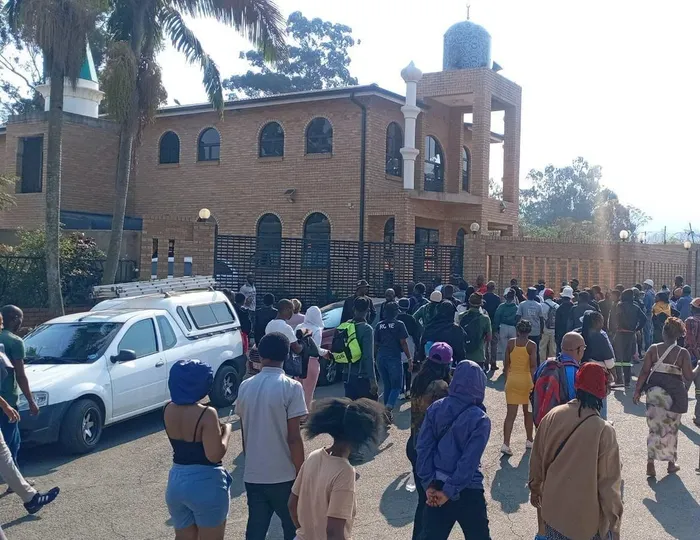
This, after tensions flared in Chatsworth, Pietermaritzburg and Johannesburg, after protesters allegedly attempted to force their way into mosques, claiming they wanted to remove worshippers they believed were undocumented foreign nationals.
The council’s secretary general, Yusuf Patel, said while they reaffirmed their support for enforcing the country’s laws, places of worship should not become focal points for immigration operations.
“The council warns that such actions create fear among worshippers, undermine the sanctity of mosques, and risk damaging trust between Muslim communities and law enforcement.
“The organisation is calling for clear SAPS guidelines to avoid immigration enforcement at places of worship except where operationally necessary and has requested a meeting with the Police Ministry to discuss balancing public safety with constitutional rights,” Patel added.
He said the council fully respected the rule of law and supported the State’s constitutional mandate to regulate and enforce the country’s immigration legislation.
However, he said the manner in which the laws are enforced must remain consistent with the Constitution’s foundational values: human dignity, freedom of religion, and the right to security.
“Historically, both in South Africa and globally, places of worship – whether mosques, churches, synagogues, temples, or other sacred spaces – have served as sanctuaries of peace, compassion, and community support.
“Conducting high-friction immigration enforcement operations within or immediately around these sacred spaces undermines their sanctity and creates fear among worshippers. When people feel unsafe attending a place of worship, a fundamental constitutional freedom is placed at risk.”
He said it was essential to distinguish between a place of worship that was actively harbouring undocumented individuals to evade the law and undocumented persons who simply attended a place of worship to fulfil their religious obligations.
“The latter should never be treated as criminal conduct. Houses of worship must remain open to all who seek spiritual guidance and prayer. A person’s faith and desire to worship should not become the basis for enforcement action at the entrance to a mosque, church, synagogue, or temple.
“Furthermore, heavy-handed enforcement in or around places of worship risks eroding the trust between law enforcement and the communities they serve. Effective policing depends on mutual respect, confidence, and cooperation. If congregants begin to associate police presence at sacred spaces with fear rather than protection, that trust is weakened, ultimately undermining broader public safety objectives.”
He said the enforcement of immigration laws and the protection of the sanctity of places of worship were not mutually exclusive.