




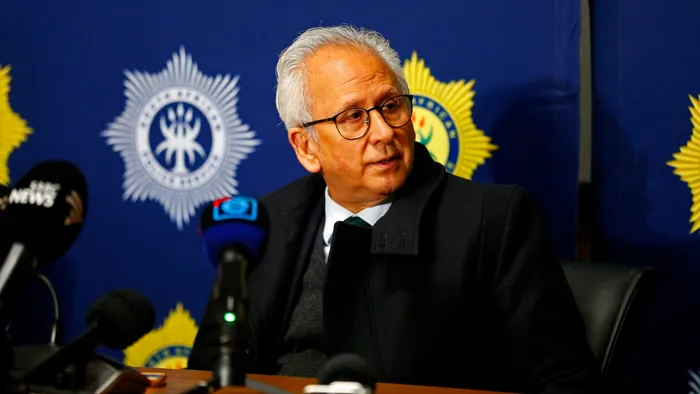
Government has officially shifted its Police Reset Agenda from policy discussions to implementation, with 140 high-crime police station precincts identified as priority sites for intervention as part of a nationwide effort to restore public confidence in the South African Police Service (SAPS).
Addressing the second Police MINMEC meeting of 2026, Acting Minister of Police Firoz Cachalia said the gathering marked a turning point in policing reform and represented more than a routine intergovernmental meeting.
“This has not been another routine intergovernmental meeting. It has been a strategic decision-making platform that has institutionalised the implementation of a National Reset Agenda for Policing as the common programme of action of national, provincial and local government,” Cachalia said.
The minister said all provincial MECs responsible for community safety had unanimously endorsed the Police Reset Agenda, signalling a united approach to tackling crime and improving policing across the country.
At the heart of the resolutions adopted during the meeting is a decision to focus resources and oversight on 140 police station precincts identified as crime hotspots.
“MINMEC resolved to prioritise interventions in 140 high-crime police station precincts across the country,” Cachalia said.
“These stations will become the first implementation sites of the Reset Agenda, receiving targeted operational support, enhanced oversight, improved resource allocation, infrastructure upgrades and rigorous performance monitoring.”
The move comes as government faces mounting pressure to address violent crime, organised criminal syndicates, gender-based violence and declining public trust in law enforcement.
Cachalia said the reforms are designed to restore professionalism, integrity and accountability within SAPS while transforming it into a modern, intelligence-led police service.
A major focus of the strategy is strengthening intelligence capabilities to combat organised crime.
MINMEC endorsed the implementation of the National Organised Crime Strategy, which will introduce a more coordinated and intelligence-driven response to criminal syndicates operating across provincial boundaries.
The minister also announced plans to rebuild crime intelligence structures, strengthen detective services and accelerate technology upgrades aimed at improving investigations and service delivery.
“Crime Intelligence is steadily being repositioned as the nerve centre of proactive policing,” he said, adding that intelligence-driven operations had already yielded successes against organised crime, illegal firearms and drug trafficking networks.
Other priorities include strengthening community policing forums, expanding the Community Patrollers Programme, intensifying action against illegal liquor outlets and improving responses to gender-based violence and femicide.
In a further boost to policing capacity, Cachalia said four provincial police commissioners would soon be appointed, while 5,500 new police recruits are expected to begin training under Project 11 000 in the coming months.
Declaring that the reform process had entered a new phase, Cachalia stressed that South Africans expected tangible improvements rather than policy commitments.
“The Police Reset Agenda is no longer a reform proposal. It has entered the implementation phase,” he said.
“South Africans expect more than commitments. They expect results. They expect safer communities. Above all, they expect a police service they can trust.”