




The Department of Correctional Services (DCS) has rejected claims that more than 28,000 parolees are untraced, telling Parliament that the figures are misleading and include historical cases that do not reflect the current community corrections system.
The department briefed Parliament’s Portfolio Committee on Correctional Services on Tuesday on Community Corrections, focusing on parole supervision, the management of absconders, compliance mechanisms, challenges, and measures to strengthen offender tracking and tracing.
The briefing follows media reports, including an AmaBhungane investigation, which alleged that thousands of parolees, including convicted murderers, rapists, and armed robbers, are not being traced by correctional services officials responsible for monitoring them. The department has dismissed the allegations.
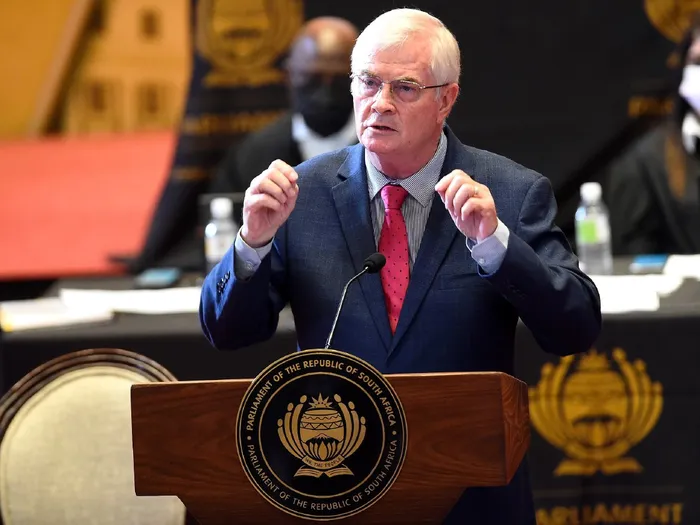
Chief Deputy Commissioner for Community Corrections Gustav Wilson said the unit is responsible for non-custodial supervision of offenders in the community.
He said Community Corrections refers to “all non-custodial measures and forms of supervision applicable to persons who are subjected to such measures and supervision in the community, and who are under the control of the department.”
Wilson said the system is designed to support the rehabilitation and reintegration of offenders back into society, adding that “the programme purpose is to provide services that focus on offenders’ preparation for release, as well as effective supervision of offenders placed under the system of community corrections, and the facilitation of the social reintegration back into communities.”
He told MPs that the debate around absconders must be understood within the historical evolution of the correctional system, particularly in relation to record-keeping and tracking capacity.
Wilson said that before 1994, tracing systems were limited, noting that “there was no tracing done by the Department” during that period, and that some offenders were only later declared absconders after their sentences had already expired.
He said the introduction of post-1994 reforms significantly improved monitoring systems, including the establishment of specialised tracking and tracing teams in 2021.
According to the department, 8,303 absconders were declared between the 2021/22 and 2025/26 financial years, while 6,060 were traced over the same period.
Wilson said the department is currently managing a caseload of 82,093 offenders under community corrections, including 29,320 classified as absconders. He added that the staffing ratio remains under pressure at one official to 87 offenders, against an ideal ratio of 1:30.
He said offenders are supervised according to risk classification, with high-risk parolees requiring a minimum of eight contacts, medium-risk four contacts, and low-risk at least two contacts.
Wilson said the department has introduced a series of administrative and operational interventions to strengthen oversight, including guidelines for the prevention, management, and tracing of absconders, as well as a revocation assessment tool.
He said the guidelines were developed “to strengthen the management of absconders and provide a uniform framework to officials,” while the assessment tool ensures “comprehensive investigations are conducted before matters are referred to the relevant authority.”
The department further told Parliament that additional directives have been issued over time to improve monitoring, including requirements for parolee photographs on files and improved coordination with the South African Police Service and the Department of Home Affairs.
Wilson also highlighted systemic challenges affecting reintegration, saying these include “a lack of sustainable support networks and active community participation.”
The department’s presentation also referenced the Parole Review Summit held in September 2025, which considered reforms aimed at strengthening parole governance, improving risk assessment, enhancing rehabilitation programmes, and reducing reoffending.