



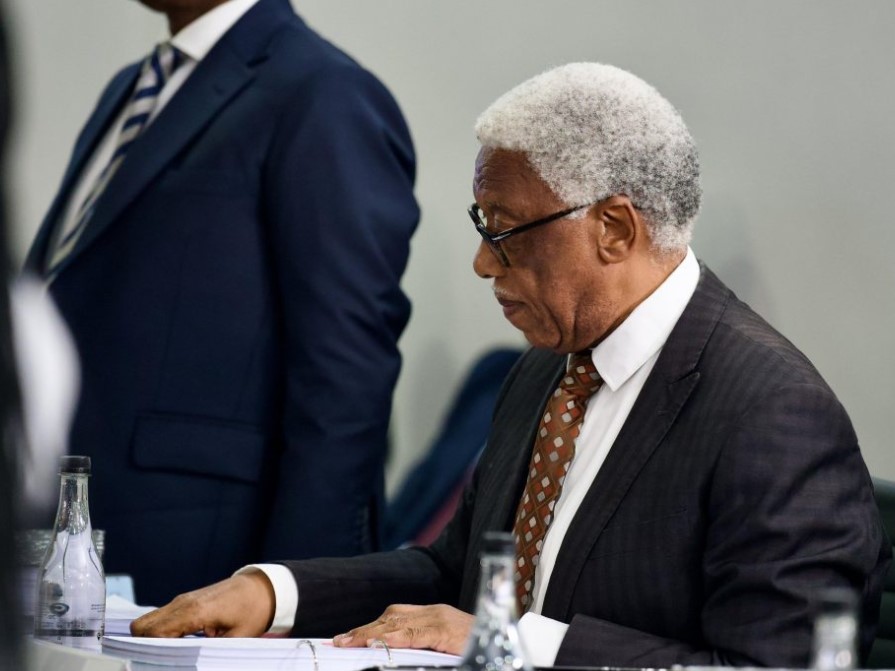
The Judicial Service Commission (JSC) hasrecommended that President Cyril Ramaphosa suspend Eastern Cape Judge President Selby Mbenenge while Parliament considers whether he should be removed from office following findings of gross misconduct.
The JSC announced the decision in a media statement on Monday.
It said that on July 7, 2026, the commission, excluding members designated by the National Assembly and the National Council of Provinces, met in terms of Section 20(1) of the Judicial Service Commission Act 9 of 1994 to consider written submissions on whether it should advise Ramaphosa to suspend Mbenenge under Section 177(3) of the Constitution.
“At this meeting, the JSC resolved to advise the President to suspend Judge President Mbenenge from his duties pending the decision of the National Assembly as contemplated in Section 177 of the Constitution,” the statement said.
The recommendation follows legal action launched by Mbenenge after the JSC found him guilty of gross misconduct and recommended his removal from office.
IOL previously reported that Mbenenge approached the North Gauteng High Court in Pretoria seeking an urgent interdict to halt the implementation of the JSC’s decisions.
Court papers filed on June 5, 2026, show that Mbenenge instituted review proceedings against the JSC, the Judicial Conduct Tribunal (JCT), the Speaker of the National Assembly, the National Assembly, the president and junior court employee Andiswa Mengo.
The application seeks interim relief as well as a full review of the decisions taken against him.
The JSC concluded that Mbenenge’s conduct, including pursuing a relationship with Mengo, a junior court employee, was “grossly inappropriate” and incompatible with judicial office.
The complaint stems from allegations by Mengo, a secretary at the Makhanda High Court, that Mbenenge sexually harassed her between June 2021 and November 2022.
The matter was first heard by the Judicial Conduct Tribunal, which found that Mbenenge was not guilty of gross misconduct, ruling that the relationship was consensual.
However, the JSC rejected that conclusion, citing serious flaws in the tribunal’s reasoning.
In the urgent part of his application, Mbenenge asked the court to hear the matter on an expedited basis and prevent the JSC from implementing its decisions.
He also sought an order stopping any impeachment proceedings until the review application is finalised.
The application further seeks to interdict Parliament and the president from acting on the JSC’s findings, including taking steps to suspend or remove him from office as Judge President of the Eastern Cape Division of the High Court.
In the review application, Mbenenge asks the court to set aside the JSC’s decision rejecting the tribunal’s finding that he was not guilty of gross misconduct. Alternatively, he seeks an order declaring the decision unlawful, unconstitutional and invalid.
He also challenges the tribunal’s finding that he committed misconduct by engaging in what it described as a flirtatious relationship with Mengo through WhatsApp messages exchanged during working hours.
The tribunal found that the conduct contravened Article 5.1 of the Code of Judicial Conduct but did not amount to gross misconduct. Mbenenge is seeking to have that finding reviewed and set aside.
According to the court papers, Mbenenge is also demanding the full record of the proceedings that led to the adverse findings against him.
He wants the JSC and the JCT to provide transcripts, audio recordings, minutes, resolutions, attendance registers and voting records related to the matter.
The requested records include documents relating to the initial complaint, the tribunal proceedings, oral submissions made during the disciplinary process and records of the JSC meeting held on March 5, 2026, at which the finding of gross misconduct was adopted.
He is also seeking disclosure of how JSC members voted on the classification of his conduct.