



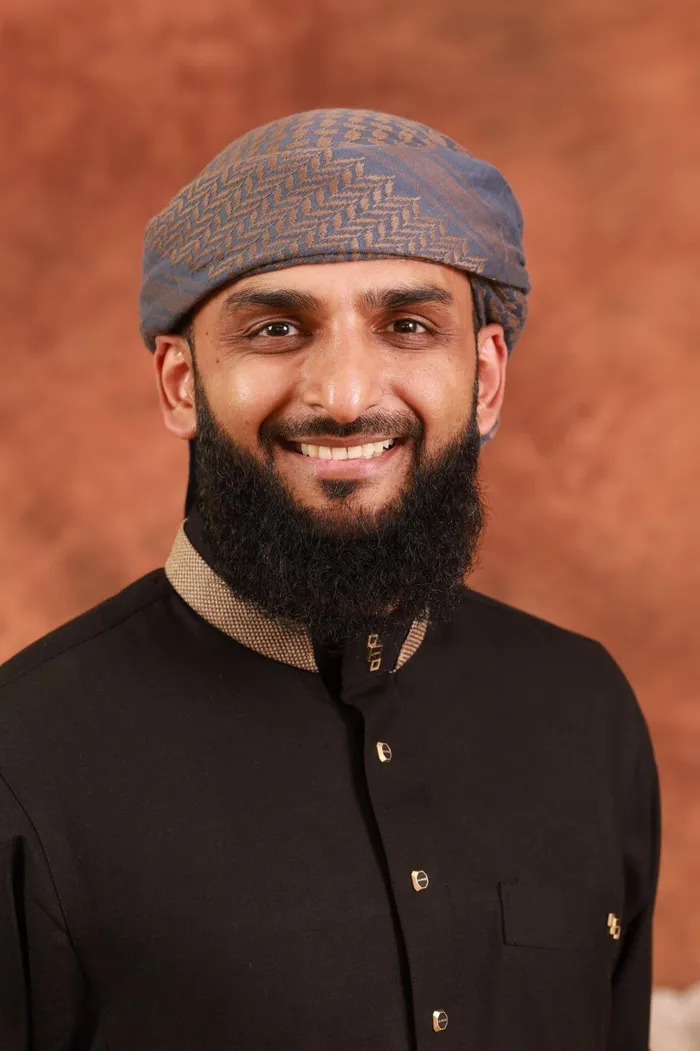
YUSUF Cassim, the newly appointed deputy minister of higher education, shares his commitment to addressing the challenges faced by South African youth, despite facing Islamophobic backlash.
He reflects on his journey from student activism to political leadership and outlines his vision for reform in the higher education sector.
Cassim, 36, of the Eastern Cape, who was sworn in last week, said the appointment felt like a “full circle” moment.
“I started my political activism as a university student after seeing the critical issues that some of my peers were faced with. However, I realised that those issues could not be solved at an institutional level.
“For me, this appointment is a return to where I started in politics but I can now contribute even more towards addressing those issues at the parliamentary level. However, I feel a weight of responsibility to make an impact; it is not going to be easy,” he said.
“But I am eager to make an impact on behalf of those students who are being set up to fail in the system or are being excluded from pursuing their aspirations in the higher education sector. I am ready to fight as hard as possible for those South Africans, especially the youth,” he said.
Student politics
Cassim said as a BCom Accounting student at the Nelson Mandela University, he was involved in many of the different societies including the Muslim Student Association.
“I also chaired some of those societies. As a natural activist at heart I became acutely aware that many of the students were being failed by the Student Representative Council (SRC), which was the elected student leadership of the university. They were not interested in addressing the issues.
“However, it was a critical period for any young person. You have been accepted into an institution of higher learning, but now you face issues like lacking funding for your studies, accommodation, or even transportation. Some students did not have bus fare to get to university to attend classes or write an examination. I thought it was not a situation that any student should find themselves in,” said Cassim.
“Unfortunately, the student leadership at the time was more interested in hosting parties and hiring vehicles using the student budget. I remember my turning point came when a SRC president hired a vehicle and drove it under the influence. He crashed the vehicle and then used the student budget for the repairs cost.
“These were the types of scandals I could not stomach and that is when I said to myself I am going to do something about it. I am not going to let them continue as there are many people’s futures that are being stolen because of this negligence,” he added.
Cassim said he started the Democratic Alliance Students’ Organisation (DASO) at the university in 2009.
“They tried to prevent us from participating, but we fought the institution to gain recognition. I was eventually the first DA student to be elected as the SRC president. Under my leadership, the DASO led SRC term of office was littered with historic victories which continue to benefit the university’s students to date.
“We were able to implement reforms such as the introduction of the Expanded Student Shuttle Service so students could have transport to get to class and examinations. We also started the SRC Bailout Fund to assist students with debt so they could access financial assistance that might be available.
“ It has been a humbling experience, especially after my appointment as I have received messages of support, many of which are from students we assisted. Many of them now hold senior positions in the public and private sector,” he said.
Political career
Cassim was appointed the DA Youth Federal chairperson at the DA Youth Federal Congress in 2013.
He was thereafter elected as a Member of Parliament for the Eastern Cape in 2014.
Cassim was appointed to lead the newly formed DASO Constituency in 2014, the Ngqura Constituency in 2016, and the PE Northern Areas Constituency in 2021.
He was elected as the provincial deputy chairperson of the DA in the Eastern Cape at the Provincial Congresses held in 2017 and 2020.
In 2023 he was elected as the DA provincial chairperson in the Eastern Cape, and reelected unopposed in 2026.
Cassim said his goal in his new position was to contribute towards making a positive impact in the higher education sector.
“There are quite a few issues that are affecting students, one of which is the instability taking place at the National Student Financial Aid Scheme (NSFAS). This is directly impacting on the ability of students, particularly from the underprivileged backgrounds, to succeed academically. I have been inundated with messages from students who have not received their NSFAS.
“However, I believe to address this issue, is by fighting for policy reform. Unless we deal with the underlying issues at a policy level, we are not going to win. I will fight vigorously to decentralise government. I believe there is no reason why student funding should not be directly dispersed to students via institutions of higher learning, rather than the centralised model that currently exists,” he said.
“Further to this, another issue I am passionate about is fighting against the quota system. Every South African, no matter the colour of their skin, should be given an opportunity of pursuing their aspirations. It should be based on their hardwork, merit and talent. I will fight for those South Africans. Ultimately, I want South Africans to be who they want to be and live the life they want. They should not be faced with any obstacles,” Cassim said.
Islamophobia
Speaking about the recent Islamophobic comments on social media following his appointment, Cassim said he had always fought hard against nationalist and extremist movements that aim to cause division.
“Unfortunately, this has been a trend not only in South Africa but in world politics in recent years. Political populists see an opportunity to profit from creating divisions in society. They try to divide us based on race, ethnicity, or religion.
“However, these divisions are not helpful towards our goal, which is to build a South Africa where all its citizens can benefit from the freedom we fought hard for. All it does is cause hate and intolerance, which is very dangerous. But my response to this is a call for South Africans to unite so we can confront the serious challenges and problems we have as a nation,” he added.
![Floyd Shivambu claims ‘everything about EFF’ in interview was true [VIDEO]](https://newsunplug.co.za/wp-content/uploads/2024/10/Floyd-Shivambu-480x320.jpg)