



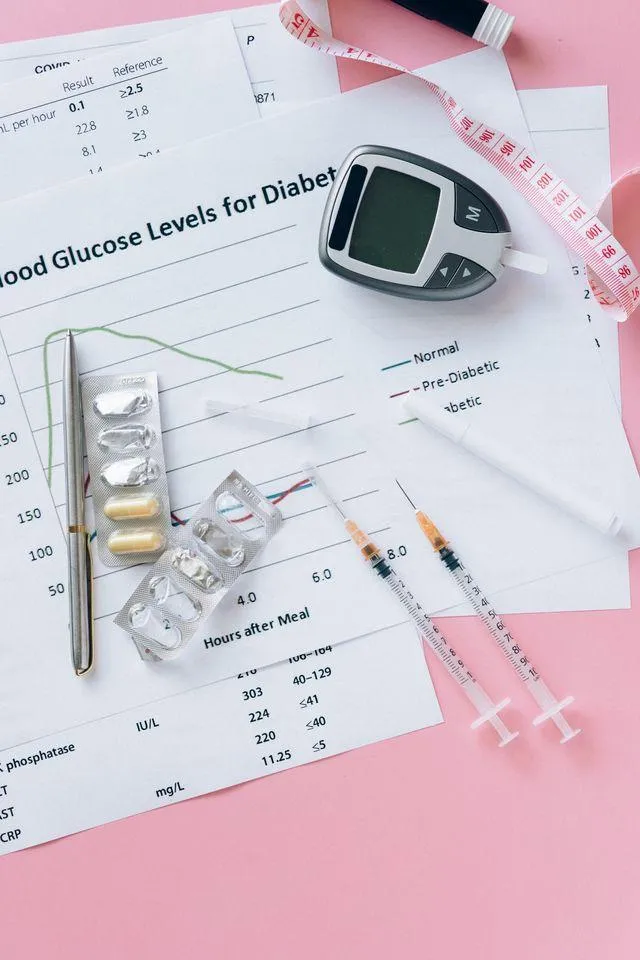
Diabetes is wearing South Africa’s Grim Reaper crown once again, claiming about 79 lives a day and ranking as the country’s biggest killer, ahead of TB and HIV.
Stats SA’s latest Mortality Report, released this month, shows diabetes accounted for 6.1% of the 474,366 deaths recorded in 2024.
The three leading causes of death in the country are now all non-communicable diseases — illnesses that cannot be passed from one person to another, including diabetes, heart disease, strokes, cancer and high blood pressure.
Communicable diseases, by contrast, are infections that can spread between people, such as tuberculosis, HIV and pneumonia.
Hypertensive diseases came second at 5.5%, and cerebrovascular diseases, which included strokes, third at 5.4%.
Together the three conditions accounted for more deaths than any infectious disease in the country, the report said.
Diabetes, a chronic disease that affects how the body regulates blood sugar, hit women hardest, accounting for 7.9% of all female deaths.
Among men, TB remained the leading cause of death at 4.8%.
HIV accounted for 3.8% of all deaths, down from 4.3% in 2022 and 4.0% in 2023.
Covid-19, the country’s biggest killer in 2020 and 2021, accounted for just 450 deaths in 2024, less than 0.1% of the total.
Gauteng recorded the highest share of deaths at 21.2%, followed by KwaZulu-Natal at 18.8%.
The Northern Cape recorded the lowest at 3.1%.
A further 62,871 people died from non-natural causes, with three-quarters recorded as accidental injuries and 12% as assault.

Image: FILE
‘Diabetes tsunami is here’
Professor Tim Noakes, the controversial Cape Town scientist who founded the Noakes Foundation, told IOL the three biggest killers in the figures were not “separate diseases at all”.
Noakes, who made his name with Lore of Running and had previously advocated carbohydrates as fuel for endurance athletes, later became one of SA’s most prominent proponents of the low-carb, high-fat Banting diet.
That landed him before the Health Professions Council of SA on an unprofessional conduct charge after he advised a breastfeeding mother on X, formerly Twitter, to wean her infant on to a low-carbohydrate, high-fat diet.
He was cleared in 2017 after a four-year fight and again on appeal a year later.
Noakes, 77, was also ridiculed a decade ago for warning that a diabetes tsunami was coming for SA.
“[All those diseases] are caused by insulin resistance and high-carbohydrate diets,” Noakes said on Wednesday.
“If you’re insulin resistant, which means you can’t metabolise carbohydrates effectively, then over time, decades, 10, 20, 30 years, you have to convert the carbohydrates that you eat into fat in your liver and fat in the pancreas and fat in your other organs.
“And that then worsens your insulin resistance, so you get this compounding problem.
“I was born in the 1940s and everyone was lean, but today everyone’s obese, and that’s the problem.
“We are in the middle of the tsunami I have talked about years ago, and the problem is it’s only going to get worse.
“It’s never going to go away if government doesn’t change food policy.
“Politicians don’t listen to biology, they listen to who’s funding them, and who do they look after?
“They look after the food industry, they don’t look after the health of the people.”
Noakes said the answer was to take ultra-processed food out of the diet entirely, and to eat meat, chicken, fish, eggs, dairy, nuts and some vegetables.
He said subsidies should go to animal produce rather than to grains and seed oils, and that eggs and tinned fish were what poor children should be getting every day instead of maize.
His foundation ran a campaign called Eat Better SA in poor communities, teaching people to eat well on very little, and patients had reversed their diabetes on the programme.
Noakes also said conventional treatment of diabetes made no difference without dietary change, a claim that runs against the national treatment guidelines and one that doctors dispute.
The health department’s treatment literacy flip chart, published this year, recommended a varied diet that includes high-fibre foods such as wholewheat bread, brown rice, oats and barley, alongside vegetables, fruit, beans, lentils, lean proteins and healthier fats.
The same guidance recorded that more than half of South African adults live with at least one chronic condition, that diabetes affects one in every eight adults, and that the disease has replaced tuberculosis as the country’s number one cause of death.
‘Sugar is not the villain’
Reverend Sean Cameron Gunn, branch manager of Diabetes SA in Durban, said the first thing readers needed to understand was that sugar itself did not cause the disease.
“There are many contributing factors, but one of them is that misconception that sugar causes diabetes – and that’s not true,” Gunn told IOL.
“People who are diagnosed with type 2 diabetes, generally they have very poor eating habits and they have very little exercise.
“Type 1 diabetes almost starts off like an autoimmune disease, where your body begins to fail to produce any form of insulin.
“This is where diet, medication and also the use of injectable insulin is brought into play.
“Unfortunately, type 1 diabetes is not reversible.
“Type 2 diabetes, on the other hand, can be reversed through diet and exercise, and there has been research by the International Diabetes Federation noting that.”
Gunn said his branch was seeing the disease in teenagers, and that rates among Durban’s Indian and African communities were now almost on par with each other.
He put much of that down to households where both parents work, where children no longer get a cooked meal at home and spend less time outside playing.
Gunn said dietitians and eye specialists were pulled in to manage patients, because the disease attacks the organs.
Priced out of a healthy plate
Armand de Wet, a return-to-play specialist in Stellenbosch who works with professional athletes, said he was seeing the same insulin problem in people who were nowhere near retirement age.
“Someone eating a high-carb diet becomes less insulin sensitive, and constantly it gets converted to visceral fat, the really bad fat around your organs,” De Wet told IOL.
“As soon as we start removing it by eating less carbs, the body becomes more insulin sensitive again.”
De Wet said elite endurance athletes were taking in between 120 and 150 grams of carbohydrates an hour, against 60 to 80 grams a few years ago, and that some were turning up pre-diabetic as a result.
He had trained between 20 and 30 people over the past year who were pre-diabetic or diabetic, and about 10 of them had reversed the condition.
Asked what a healthy diet looked like for a family on a tight budget, he said organ meat was cheap and packed with vitamins, minerals and protein, but that he could not pretend the sums worked easily.
“Unfortunately meat is a little bit more on the expensive side,” De Wet said.
“Eggs are going to cost you a lot more, and milk is expensive, so everyone is unfortunately going to go with what their budget can uphold.”
The Diabetes Alliance has written to President Cyril Ramaphosa, finance minister Enoch Godongwana and health minister Dr Aaron Motsoaledi, urging government to act on the death toll.
In April, 24 civil society organisations joined forces and called for a national diabetes registry and for health funding to be redirected towards managing the disease.
Stats SA warned in the report that 18.2% of natural deaths in 2024 were recorded under ill-defined causes, which makes it impossible to track disease trends properly.
“It also creates a distorted view of the health status of a population,” Stats SA said.