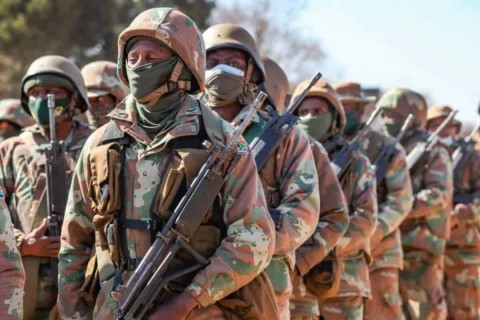




The South African government has placed the country on maximum operational readiness ahead of the planned nationwide demonstrations on June 30, warning that any acts of violence, intimidation or lawlessness will be met with swift action from law enforcement agencies.
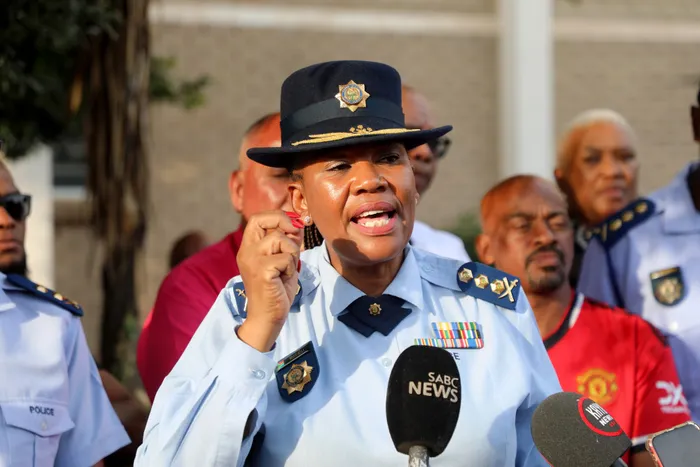
Deputy national Commissioner of Police, Lieutenant General Tebello Mosikili said the security cluster had activated its national operational plan under Operation 30 June, with thousands of law enforcement officers deployed across all nine provinces.
“I’m pleased to report that in the last 24 hours the country has remained relatively stable, and the security cluster has now entered the full implementation phase of Operation June 30,” Mosikili said.
“From this moment, our national operational plan is fully activated. The country is now under maximum operational readiness.”
The briefing comes amid heightened tensions ahead of anti-illegal immigration marches planned for Tuesday, with authorities determined to prevent a repeat of violence and xenophobic attacks that have surfaced in parts of the country in recent months.
Mosikili said National Joint Operational and Intelligence Structures, Provincial Joint Operational and Intelligence Structures and operational command centres were functioning around the clock, while Public Order Policing units, specialised teams and the SAPS Air Wing had been placed on standby.
“We have entered the first critical hours of this national operation,” she said.
“Let there be no doubt: Government is ready.”
The security cluster stressed that peaceful and lawful demonstrations would be protected but warned that criminal behaviour would not be tolerated.
“We will secure every lawful and peaceful demonstration. We will protect every community. We will safeguard critical infrastructure. We will maintain public order,” Mosikili said.
“And where criminality presents itself, we will respond swiftly, proportionately and decisively within the confines of the law.”
Play Video
In one of the strongest warnings issued ahead of the marches, the police urged anyone planning unlawful activities to reconsider.
“To those who intend to break the law tomorrow, our message is simple: do not test the resolve of the State,” Mosikili said.
The security cluster also drew a firm line between constitutional rights and criminal conduct.
“There is a clear distinction between exercising democratic rights and committing criminal offences. Anyone who crosses that line must expect the full and immediate consequence of the law.”
Authorities vowed that no individual or group would be allowed to undermine state authority, intimidate communities, shut down economic activity or prevent citizens from accessing schools, workplaces and healthcare facilities.
Mosikili further warned that dangerous weapons, including firearms, knives and traditional weapons, would not be permitted during demonstrations.
Meanwhile, police revealed that four people were arrested over the weekend after allegedly entering a home in Rosettenville, Johannesburg, and harassing a Congolese family. The suspects face charges of public violence and house robbery.
The security cluster also disclosed that since March, police have registered 103 anti-foreigner-related cases and arrested 195 suspects nationwide.
In a sign of the government’s intensified immigration enforcement efforts, Mosikili said more than 2,800 undocumented foreign nationals had been arrested in the past week alone, while more than 50,000 had been arrested since January.
She added that over 25,000 foreign nationals had already been repatriated.
“All buses transporting repatriated foreign nationals are travelling under strict law enforcement escort from departure to the designated ports of entry,” she said.
The security cluster said critical infrastructure, airports, ports of entry, healthcare facilities, shopping centres and transport routes were receiving enhanced protection, while intelligence teams continued to monitor developments in real time.
Mosikili also warned against inflammatory content circulating online.
“We are aware of various narratives circulating on digital platforms. Where criminal conduct is identified, investigations are already underway. Incitement to commit violence is a criminal offence.”
She urged South Africans not to be intimidated by threats on social media and reassured the public that authorities were fully prepared.
“The Republic of South Africa is governed by the rule of law — not by threats, fear or intimidation,” she said.
“Tomorrow, the Constitution will be protected. Public safety will be protected. Lives will be protected. The authority of the State will be upheld.”
Ending her address, Mosikili called for unity and calm ahead of Tuesday’s demonstrations.
“Let us reject division, violence, xenophobia and lawlessness. Let us embrace the values that define us as a nation, Ubuntu, mutual respect and the rule of law.”
“The security cluster stands ready. The law will be upheld. South Africa will remain safe.”