



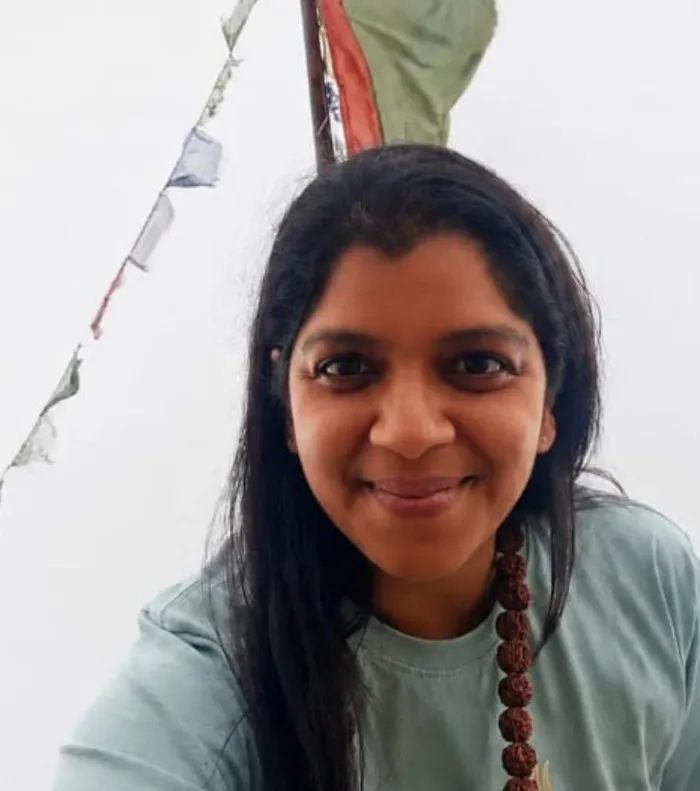
Bavika Ramjee had been looking forward to her pilgrimage to Mount Kailash for years.
And when she finally set off on the journey she had waited so long for, she had no idea that three days later, an excited conversation with her family about the pilgrimage would be the very last time they would hear from her.
That conversation was on Tuesday last week.
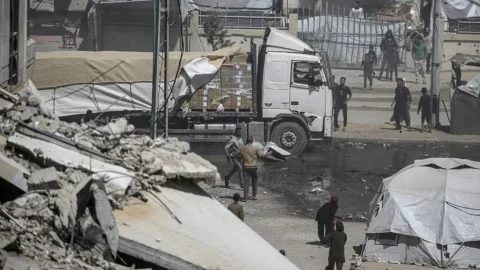
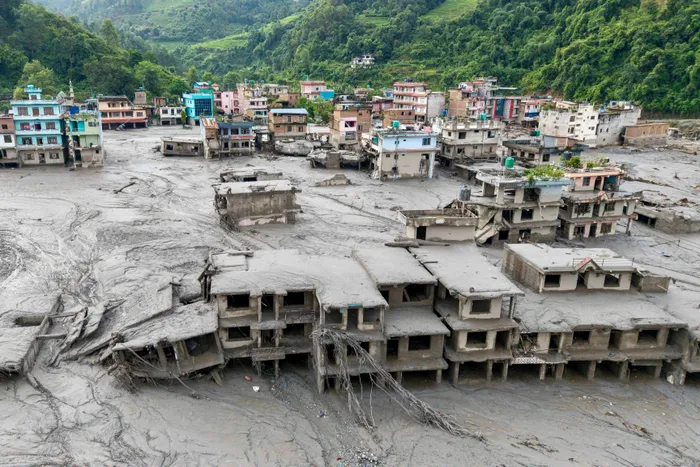
A glacier collapsed near the Nepal-Tibet border the next morning, causing floods that destroyed homes, buildings and infrastructure along a 72km stretch of the Trishuli River.
Ramjee, one of six South Africans missing in a disaster that has killed more than 1,000 people, has not been heard from since.
“She was off on a pilgrimage in Kailash,” her brother Bhavesh Ramjee told IOL.
“She was there three days at the time of the floods.”
The family said there had been no new updates, but they remained hopeful, despite being heartbroken by the uncertainty.
Ramjee, 43, a businesswoman of KuGompo City, formerly East London, had travelled with tour operator Kailash Journeys to walk the sacred route around Mount Kailash in Tibet, a mountain revered by Hindus, Buddhists, Jains and followers of Bon.
She has no children.
Ramjee is among 583 foreign nationals from 38 countries still unaccounted for.
About 1,068 bodies had been recovered, including 400 partial remains, while 4,606 people were still missing, Nepal police said on Tuesday.
Chinese state broadcaster CCTV reported a further 16 deaths and 546 people missing in Gyirong county in Tibet, on the other side of the border.
The flood began high in the Lhende Khola, a tributary that joins the Bhote Koshi River at the Rasuwagadhi border crossing, on Wednesday last week.
Nepal’s Department of Roads said the entire 42km road between Betrawati and Rasuwagadhi had been destroyed, along with another 16km stretch from the crossing to the border.
The Nepal Electricity Authority said 14 hydropower projects and a 220kV substation had been damaged, cutting about 431MW from the national grid.
Disaster authority spokesperson Shanti Mahat said 35 motorable bridges, 45 suspension bridges and around 40km of road had been damaged, with roads blocked across nine districts.
The UN said 65,000 people needed emergency water, sanitation or hygiene support.
“More than 22,000 children need protection,” UN spokesperson Stéphane Dujarric said on Monday.
The SA High Commissioner to India, Nepal and Bangladesh, Professor Anil Sooklal, said Nepal’s rugged terrain was hampering efforts to find the missing as emergency workers continued their search in the flood-hit region.
“We understand the pain and anguish that the families in South Africa are undergoing,” Sooklal said.
“But we want to give the reassurance, both from the side of the High Commission and through the office of our honorary consul, that we have been in direct contact with the Nepalese High Commission here in Delhi as well, to constantly try and see if we can get information about the six South Africans.”
Bodies still waiting to be identified
Nepal’s health ministry said only 4% of the roughly 900 bodies recovered at the weekend had been identified.
There is no longer enough space in mortuaries to keep the dead, with hundreds of bodies now being buried in open ground along the riverbanks after DNA samples were taken.
Prime Minister Balendra Shah said only bodies that were too badly damaged to be identified were being buried, with DNA samples and other evidence kept from each case.
“Identified bodies are being handed over to their families,” Shah said in a Facebook post on Tuesday.
The Indian embassy in Kathmandu said on Tuesday that a 19-member Indian forensic team had begun analysing DNA samples with Nepali experts.
China has also offered to send specialists to help identify the dead.
Gift of the Givers has been working around the clock with Nepali disaster management officials to establish where the six South Africans were when the disaster happened.
Founder Imtiaz Sooliman said there was still no confirmation of their whereabouts.
“There is no functioning phone. There’s no information, nothing,” Sooliman said.
“Helicopter surveillance is the only means of access as all roads have been destroyed.”
Sooliman said a South African living in Nepal was circulating photographs of the six in the Nepali media.
The organisation has 11 urban search and water rescue specialists on standby, with four SAPS dog handlers and four search dogs, but cannot deploy until Nepal formally requests international assistance.
“Our thoughts remain with those missing and their families as rescue teams continue the search,” Gift of the Givers said.
The Department of International Relations and Co-operation has written to the Nepalese government in support of the search.
The other five South Africans missing are Vivaganathan Pillay, 66, and his wife Janet, 56, and Surendranath Maharaj, 74, and his wife Anita Devi, 67, all from Ladysmith in KwaZulu-Natal, and Terricia Govender, 33, a data analyst from Isipingo Beach, Durban.
Govender was due home on August 28.