



More than 2,000 Zimbabweans are crammed into a Cape Town refugee centre built to handle just 300, waiting in the cold to be sent home on the eve of the June 30 deadline for foreign nationals to leave the country.
They are sleeping at the Cape Town Refugee Reception Centre, the home affairs building in Epping, which the metro has turned into the processing point for those going home.
Most are from Zimbabwe. The City of Cape Town moved them there on Sunday morning, after they had spent days camped on the pavement outside the Zimbabwean consulate in District Six, some of them for as long as five nights. It rained heavily on Sunday.
Thousands seek safety before June 30
On Monday morning, many of those waiting in the queues said they had still not eaten.
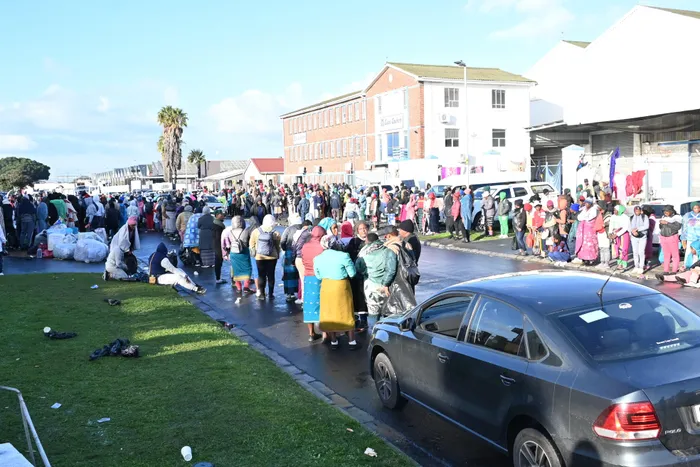
Outside the centre, small groups of young men huddled around fires built on the tar to keep warm, their backpacks and bags wrapped in plastic at their feet.
Suitcases, blankets and bundles tied up in cling film were stacked along the kerb and against the walls. Women and children sat atop their belongings as they waited, while others stood in snaking queues.
Litter blew across the open ground around them. Inside, the hall told the same story.
The home affairs service counters, numbered and watched over by officers, looked out over a floor packed with families.

Image: Bheki Radebe
Women and children, many of them babies, sat and lay on blankets and bedding spread across the tiles between the rows of steel chairs.
Their belongings were bundled into bags around them.
Most were wrapped in beanies and hoodies against the cold. Many more queued outside, lining up along a brick wall, mothers with babies on their backs and children sitting on the low wall beside them.
Cold, hunger and long queues at the processing centre
Brenna Chidhe, 31, stood in line waiting for his fingerprints to be taken, his clothes still damp from the night before.
“We are going back because we want to go back, and they asked us to go back,” he said.
“We feel protected.”But he said the processing was painfully slow.”Fingerprints are being taken of us here. Long, long process.
“We are cold. It was raining yesterday.”
The deadline driving Chidhe and thousands like him out of the country was not set by the government.
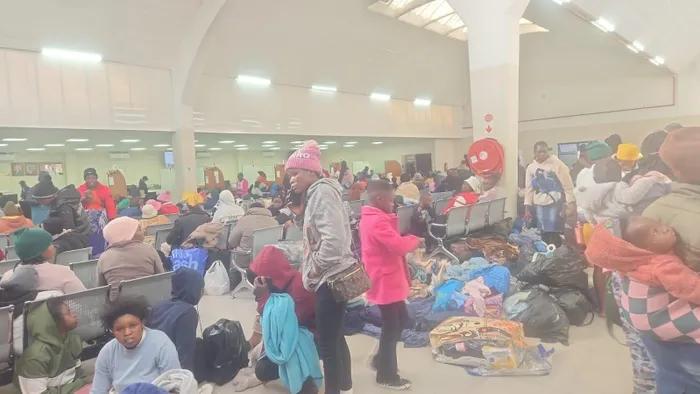
Image: Brandon Nel
It was called by the anti-immigration movement March and March, together with a coalition of other groups, including Operation Dudula.
They want all undocumented foreign nationals to leave South Africa by June 30.
The date spread quickly on social media in May after a fake poster, carrying the government’s coat of arms and the Home Affairs name, began circulating online. The government has dismissed the poster as false and insisted there is no such deadline. It has been said that Tuesday will be treated as a normal working day.
Families fear violence despite government assurances
Even so, the date has taken hold. Across the country, foreign nationals have packed up their belongings and headed for their consulates and the borders.
At the Epping centre, the fear was easy to read on the faces of those waiting.
Clifford Riunhare, 52, said the strain was wearing him down.”My heart is not feeling well. Dangerous situation. We are trying to protect ourselves,” he said.
He said the biggest problem was getting out of the city.
“We are hoping for transport,” he said. “It is difficult to get transport. We are wet as it was raining yesterday. We are facing big challenges. We haven’t eaten.”
Riunhare said he had been in SA for a year, working in construction after coming from Zimbabwe.
He said he had six children back home who depended on the money he sent them every month.
Lovemore Chirienda, 55, has been in the country far longer, having spent 10 years in Cape Town doing garden work wherever he could find it.
He is from Zimbabwe, has seven children to look after, and makes about R250 on a good day.He said he was brought to the centre on Sunday and had been hungry ever since.
“I haven’t had anything to eat this morning,” he said. “Last night we shared a loaf of bread between myself and a friend. Haven’t been able to bath.”
Calvin Moyo, 20, said he had lived in Zimbabwe his whole life before moving to Robertson in the Western Cape in February, hoping to find work.He stayed with his sister, who has been in the country legally for years.
The job never came, and now he is leaving with nothing but his fear.”I am very scared for what’s to happen tomorrow,” he said.
Aid groups warn of overcrowding and humanitarian strain
The crowds gathered in Cape Town because of the consulate. The city has said the Epping centre is now the only official site for processing voluntary returns.
From there, people are taken to the Beitbridge border post for the journey into Zimbabwe.Aid groups have warned that the centre lacks the capacity to cope.
Gift of the Givers said more than 2,000 undocumented Zimbabweans, many of them women and babies, had spent the night at a building meant to hold a fraction of that number.
The organisation said some had arrived believing they would be handed travel documents on the spot, only to find a slow and crowded process waiting for them.
On Monday, relief began to arrive.A truck loaded with bottled water, boxes of food and other supplies pulled up at the centre.Gift of the Givers workers were on the ground to help the families.
Not everyone, though, is leaving.In Strand, about a 20km drive from Epping, the spaza shops opened their doors as they do every other day.
At a shop called Greenfield, the manager did not want to give his name.
He said he had been in SA for many years and had no intention of running.”We are opening tomorrow,” he said.
Down the road at Masakhane Cash Store, manager Mohammed Ali said he had moved to South Africa in 2010 and opened the shop that same year.
He said he employed six workers and rented the premises from a Xhosa owner.He said the talk of a deadline had not shaken him.”We are not scared,” he said.
At another shop, Panorama, manager Abdul Mohammed said the business had stood there since 2008.
Some migrants refuse to leave as protests loom
He said two of them ran it, that he was from Somalia, and that the owners were South African.He, too, said the shop would stay open.
None of the shopkeepers in Strand said they had any plans to close.
The deadline has come on the back of a wider wave of anti-immigrant action.Groups including March and March and Operation Dudula have marched on businesses, stopped people in the streets to check their documents, and called for a national protest on Tuesday.
March and March has insisted the protest will be peaceful.Its leader, Jacinta Ngobese-Zuma, has said the movement will not take responsibility for any violence on the day, arguing that public safety is the job of the state.
A coalition of 27 civic organisations is backing the action.The marches will go ahead despite resistance from some quarters.A coalition of 160 civil society organisations has called for the cancellation of the action and for the arrest of the movement’s leaders for incitement.
The SA Human Rights Commission has warned of a possible human rights crisis.Police have said they are ready for whatever the day brings.
Acting police minister Firoz Cachalia said the operation around the deadline would cost more than R600m, with police, defence and intelligence working together.He warned no group would be allowed to take the law into its own hands.
President Cyril Ramaphosa has repeatedly condemned the attacks, saying they do not reflect government policy or the views of South African.