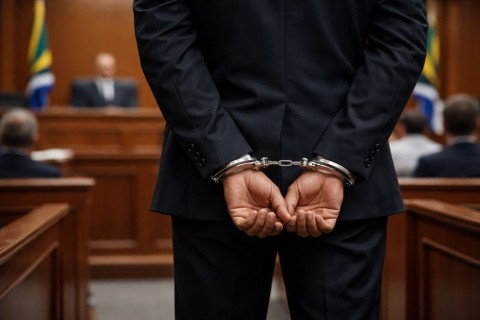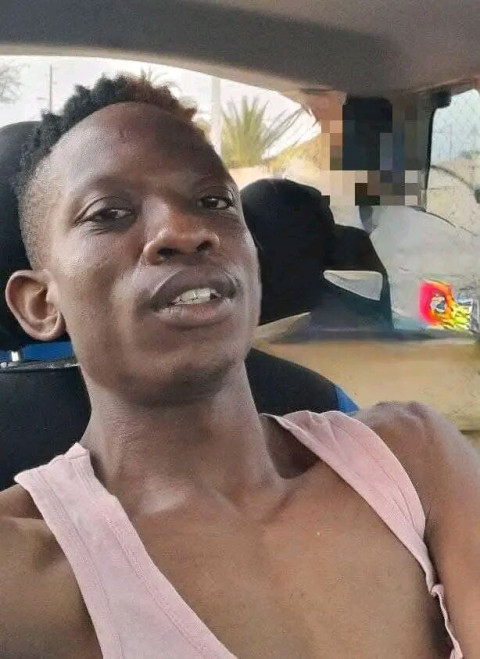




A CORRECTIONAL services officer sued the Correctional Services Minister for damages after a “degrading” strip-search following a tip-off about drugs at the facility.
The East London official, Simphiwe Nkwateni turned to the Eastern Cape High Court after nothing was found on him, claiming the search was “malicious”, done without a warrant.
He said he was intercepted by his supervisor, only identified as Mrhasi on July 7, 2023 after returning from lunch.
Instead of a routine pat-down, Nkwateni testified he was ordered to strip down following a tip-off that he was bringing contraband, including drugs, into the facility.
Nkwateni testified that he accompanied Mrhasi to his office, where another official was also present. Mrhasi told him that he had received information alleging that he was carrying drugs. Nkwateni wanted his shop steward to be present as a witness, but the latter was unavailable.
Nkwateni said he was then strip-searched in a manner that he described as “forceful,” based on his perception that he had not consented to the search and because a witness of his choice was not present.
Those responsible for the search were his superiors, and he believed that he had no option but to comply with their demand. All his clothes were removed. While the door of the office was closed, there were gaps in the blinds, which were old and tattered, so that it was possible for someone outside the room to see the search, he said.
Nkwateni explained that Mrhasi had forcefully removed his clothing. He was stripped naked, instructed to turn around and face the wall, and to squat to ensure that he was not retaining any contraband, but nothing was found.
He said he was so upset that he ran out of the office dressed only in his socks and underpants. He put on his vest at some point in the passage.
Nkwateni expressed concern that he had been searched by two persons who were not African males and that other males had been permitted to observe his build.
He eventually put on his trousers and boots, without lacing them up, and his shirt. He decided that he would resign (which he did not do) and rushed to the area commissioner’s office. He was requested to go home, given that he was emotional.
Even though no unlawful substances were discovered during the search, he never received an apology.
Nkwateni maintained that the search was inhumane and that he could have been searched in a private cubicle, which contained a scanner.
Mrhasi, the unit manager, testified that Nkwateni worked directly with inmates, and when he had received a telephonic tip-off shortly before noon on the day of the incident, saying that Nkwateni would return with drugs, it was decided on the strip-search.
According to him, Nkwateni signed a form in which the procedures were explained to him before he undressed. As nothing was found, Nkwateni was told to get dressed, but he opted to dash out of the office, wearing only his socks and his underwear, the official said.
Mrhasi explained that, given the tip-off, it was inappropriate to allow Nkwateni to be searched in the ordinary manner in the cubicle used to search anyone entering the prison. He suggested that the cubicle was “not safe enough” for the type of search. According to him, Nkwateni did not seem to have a problem with being searched.
In turning down his claim, the court concluded that the search was justified, lawful, and conducted in private. The court said there was no evidence of malice. It accepted the evidence of the officials that Nkwateni had removed his own clothes, that he was not required to squat, and that the blinds in the office were closed so that nobody outside could see him naked.