




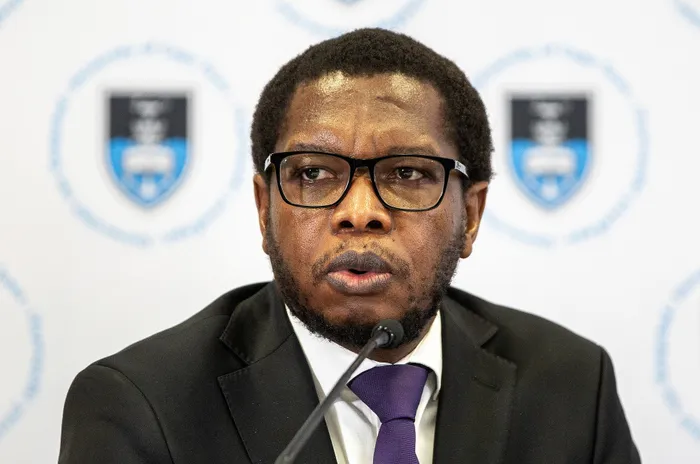
Fresh questions have emerged over the origins and handling of complaints against Vice-Chancellor Professor Mosa Moshabela after investigators recorded that 18 of the 20 people they managed to contact denied lodging complaints against him.
The disclosure is contained in the Rule 53 record filed as part of Moshabela’s High Court review proceedings, which includes confidential Council minutes and the final report into complaints involving the Vice-Chancellor.
Council initially appointed investigators in February to conduct a confidential investigation into 31 complaints reported through the Office of the Ombud. The mandate was expanded a month later to include additional allegations as well as an investigation into the conduct of the Ombud during the process.
The report states that the initial mandate focused on 27 individuals who were believed to be willing or conditionally willing to participate.
However, investigators recorded that contact details were initially available for only 10 of those 27 people.
Investigators recommend no disciplinary proceedings
They ultimately managed to trace and contact 20.
Of those 20, 18 denied that they had ever lodged complaints against Moshabela.
The remaining two confirmed having raised complaints but were unwilling to disclose their identities to the Vice-Chancellor or participate in a process where they would be identified.
Under the investigators’ terms of reference, allegations could not be put to Moshabela or form the basis of disciplinary proceedings unless complainants agreed to their identities being disclosed.
The investigators subsequently recommended that disciplinary proceedings not be instituted in relation to the complaints attributed to the original group.
The report states that two people who confirmed making complaints said they had not been asked whether they would be willing to participate in an investigation. Those who denied being complainants also told investigators they had not been asked about their willingness to participate.
Council divided over Forest Hill matter
Cape Argus previously reported that former acting Deputy Vice-Chancellor for Research and Internationalisation Professor Jeff Murugan had reportedly raised concerns after learning a complaint had allegedly been associated with him.
Murugan subsequently requested an impartial investigation into how the alleged complaint came to be associated with him and offered to provide testimony under oath.
UCT academic Dr Zamambo Mkhize separately stated under oath that she was never a complainant in what became known as the Forrest Hill matter.
Mkhize said she had never lodged a complaint with the Ombud or anyone else over the incident, which followed a wellness intervention at her university residence after she became seriously ill.
Despite this, the Forrest Hill incident was later placed before Council for consideration.
Council accepts recommendation as court challenge continues
Council members were divided on whether the matter should be investigated further. A secret ballot resulted in nine members supporting closing the matter, nine supporting a further investigation and four favouring an alternative approach.
With the vote tied, the Council chair cast the deciding vote in favour of further investigation.
The Council minutes also show that none of the initial 31 complaints could proceed under the terms established for the investigation.
Three additional complaints were considered. Of those, one complainant agreed to be identified and formally pursue the matter.
Investigators ultimately recommended that no disciplinary proceedings be instituted against Moshabela in respect of either the initial 31 complaints or the three additional complaints.
Council accepted that recommendation.
Responding to questions from the Cape Argus, UCT said it would not comment on the substance of the latest disclosures as the dispute remains before the courts.
“UCT reiterates that the legal matter involving the Vice-Chancellor and the university’s Council is currently before the courts. It would therefore not be appropriate for the university to comment on the details or merits of the case at this stage.”