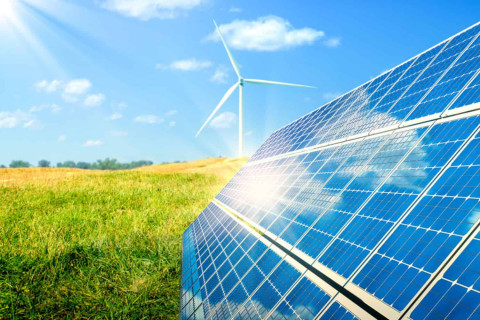




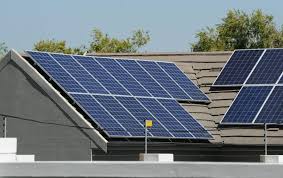
South Africa’s rooftop solar boom is showing no signs of slowing, with installed capacity passing the 8.3 GW mark — though the load shedding that sparked the rush has all but disappeared.
The latest figures from Eskom’s national transmission company show rooftop solar capacity in the country has surpassed 8.3 GW.
The steepest growth came during the peak load shedding years of 2022 and 2023, but installations have kept climbing even after rolling blackouts effectively ended in early 2024.
The driver now is money, with steep Eskom tariff hikes making solar cheaper than grid electricity for many households and businesses.
Official data from Stats South Africa’s general household survey shows 675,000 households had solar panels in 2025, an 86% jump in three years.
More than two-thirds of those households are in Gauteng and the Western Cape.
Rooftop solar alone now exceeds the combined operational solar capacity contracted under the government’s flagship renewable energy programmes.
Nationally, South Africa’s total installed solar capacity has passed 10 GW, cementing its position as Africa’s largest solar market, after about 1.6 GW was added last year.
Solar industry expert Marius Rudolph, founder of Gauteng-based installer Your Solar SA, said the market had fundamentally changed.
“South Africans no longer view solar as simply a backup solution. It has become an investment in financial freedom, energy security and long-term sustainability,” Rudolph said.
“Every installation represents another family or business taking control of its future.”
Rudolph said customers who once bought solar simply to survive load shedding were now focused on cutting monthly bills, protecting themselves against future tariff increases and adding value to their properties.
“The conversation has evolved. Clients now ask how they can maximise savings, integrate battery storage and future-proof their homes,” Rudolph said.
“Solar has become a smart financial decision as much as an energy decision.”
Eskom, meanwhile, has moved to bring the wave of private installations into the regulatory fold.
The utility has extended its registration fee waiver for small-scale systems of up to 50kVA until September 30, waiving connection fees and providing a free smart meter — worth up to R10,000 for urban customers and R36,000 for rural customers.
“We recognise the important role customers play in South Africa’s energy transition. Our goal is to ensure installations are safe, compliant and aligned with protecting the national grid,” Eskom acting group executive for distribution Agnes Mlambo said.
Energy regulator Nersa has said registration is not meant to discourage solar, but to ensure systems are connected in a way that protects the national grid.
Not everyone is convinced, with civil society groups questioning why households who invested in solar during the power crisis should now face red tape.
Industry analysts expect the market to keep growing through 2026, driven by falling technology costs, better financing options and continued tariff pressure.
Rudolph said the shift was permanent.
“Renewable energy is no longer the future — it is the present,” Rudolph said.
“South Africans have shown incredible resilience over the past few years, and solar has become one of the strongest examples of how innovation can solve real-world challenges while creating lasting value for generations to come.”