



International Relations and Cooperation Minister Ronald Lamola says Ghana’s call for an African Union (AU) discussion on migration-related violence in South Africa should focus on the continent’s migration challenges rather than “finger-pointing” at South Africa.
Lamola said the issue required a broader continental discussion on the root causes of migration, including economic challenges, unemployment, governance failures, peace and security concerns, and climate change.
“This debate that is being called by Ghana should not be a debate of finger-pointing and cheap political scoring against South Africa because it will not be helpful,” Lamola said.
“It should be a constructive engagement on migration.
”The root causes are the economic challenges that the continent faces, the challenges of lack of economic growth, unemployment, and so forth happening across the continent, and issues of governance, peace and security that lead people to leave their own countries, including issues of climate change.”
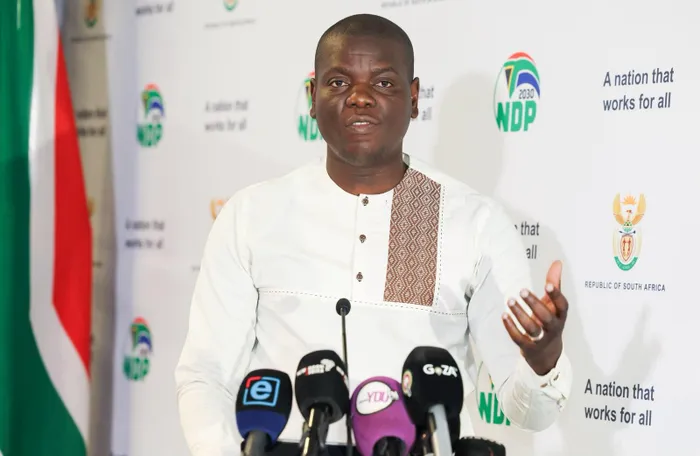
Lamola was speaking during an inter-ministerial committee media briefing in Pretoria on Sunday, where he also responded to claims that South Africa’s delegation to Ghana had been rejected.
He said he had travelled to Accra as a special envoy of President Cyril Ramaphosa and was received by Ghanaian President John Mahama and Foreign Affairs Minister Samuel Okudzeto Ablakwa.
“I went to Accra, Ghana as a special envoy of the President, and I was well received by President Mahama, with the Minister of Foreign Affairs of Ghana, Mr Ablakwa, and his delegation, and we had a discussion,” Lamola said.
The minister said the meeting reaffirmed the longstanding relationship between South Africa and Ghana and that both countries agreed the matter would not affect bilateral relations.
Lamola said Ghana recognised South Africa’s sovereign right to enforce its immigration laws, but raised concerns about violence during protests and what it viewed as a lack of accountability for individuals involved in criminal activities.
“The second point that was agreed upon is that South Africa is a sovereign country, has a right to enforce its immigration laws, just like Ghana has the right to enforce its own immigration laws,” he said.
He said Ghana’s concerns centred on allegations of violence by private individuals and groups, including incidents where people allegedly impersonated police officers and immigration officials.
Lamola said South Africa had taken action against those accused of criminal offences during protests.
“We did respond that the South African government has acted, there have been arrests of those who are impersonating police officers, and those that have been involved in looting, housebreaking and so forth during this protest,” he said.
Play Video
He said investigations into the deaths of Ghanaian nationals in South Africa were ongoing, including the killing of a Ghanaian national in Nyanga.
“It remains an active investigation by the South African police,” Lamola said.
The minister said migration policies adopted by the AU and SADC promoted legal, regular and orderly migration, and did not support uncontrolled movement between countries.
“The protocols of the AU and that of SADC don’t call for disorderly, irregular and illegal migration. So migration must be orderly, must be regular, and must be legal,” he said.
Lamola said South Africa remained willing to engage with continental bodies, including an AU process, but maintained that migration challenges needed to be addressed collectively across Africa.
“We welcome any discussion that will be comprehensive on migration, to deal with all issues, including the root causes of illegal migration,” he said.