



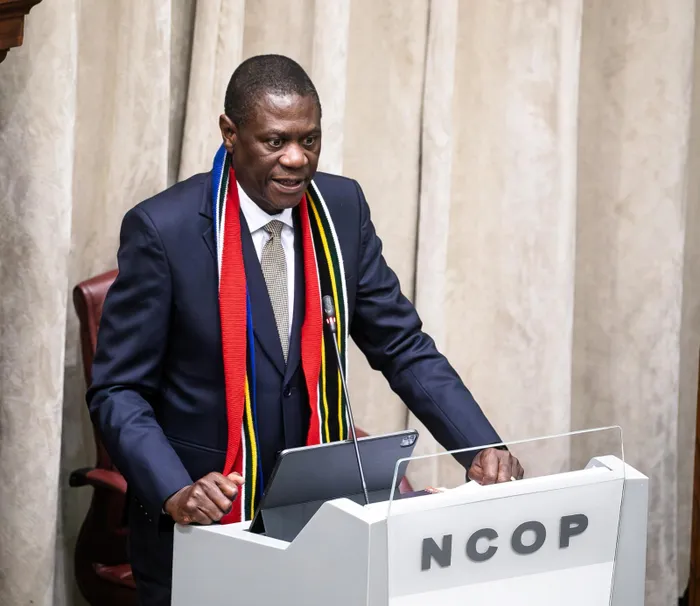
The Deputy President, Paul Mashatile, said that they have not only been acting to root out crime and corruption since the establishment of the Madlanga Commission, but that they are thankful for the commission bringing “out more and more that we may not have seen before”.
Mashatile was responding to oral questions in the National Council of Provinces (NCOP) on Thursday, where MPs questioned the government’s progress in addressing gang-related violence in the Western Cape, Operation Proper, as well as the Madlanga Commission.
Regarding Operation Prosper, which is being implemented in the Cape Flats and surrounding areas, he said that they had recorded 672 arrests since April this year.
“Murders have been reduced in 11 stations. In other words, areas covering 11 stations, and drug recoveries have also increased in areas covered by about 12 stations. I also had an opportunity to meet some of the families that have been affected by gang-related violence in the Cape Flats, and I also had an opportunity to address community members on that day,” he said.
Mashatile said that although he has not met with the acting minister Firoz Cachalia yet, to share ideas about the way forward, “we have agreed that he and the deputy police ministers, working with the deputy minister of social development, will continue to monitor progress and ensure the provision of psycho-social support to those affected families”.
“SAPS is currently developing a monitoring system to measure the success and impact of Operation Prosper, including in provinces affected by illegal mining.
“While progress is commendable, intensified efforts are being conducted now in Gugulethu, Manenberg, and Khayelitsha to defeat gang violence and restore community safety. Follow-up visits will continue in these areas as well,” Mashatile said.
He also questioned whether corrective actions were implemented within SAPS prior to the Madlanga Commission to detect and prevent corruption. Mashatile said that the work was being done by the anti-corruption unit within the SAPS, but that it is now being reinforced by the Madlanga Commission.
“The Madlanga Commission is bringing out more when we appreciate it, but it’s not like nothing was happening. The anti-corruption units in the police are not new. They’ve been set up previously, they have been operating, and there are members of the force and of the service who have been charged long before the Madlanga Commission.
“But what the Madlanga Commission has done is to ensure that it brings out more and more that we may not have seen before. But not that we are not doing anything, and we appreciate that, we support it,” Mashatile said.
“That’s why, as the Madlanga Commission uncovers, we now act, and we act speedily, but we are also reinforcing the institutions themselves. As I said, I ensured those anti-corruption units are being strengthened,” he said.
“As we speak, we are re-looking and reviewing the disciplinary codes, ensuring that they are tightened up to ensure that there are no loopholes. We’re going to continue to do so.
“We’re not going to wait for the Madlanga Commission to discover more; we’re going to do it ourselves. We are doing it, and we are strengthening, and we are closing all the loopholes,” he said.
He said that Cachalia is currently reviewing the disciplinary regulation in conjunction with work that’s been done by other departments, like the National Treasury.
“The National Treasury is also looking at the regulations through the Government Technical Advisory Centre, and they are working with the national acting minister of Police to ensure that we tighten up these reforms, to ensure that we close the gaps and make sure that the disciplinary regulations are much tighter, to ensure that we can get effective results,” he said.
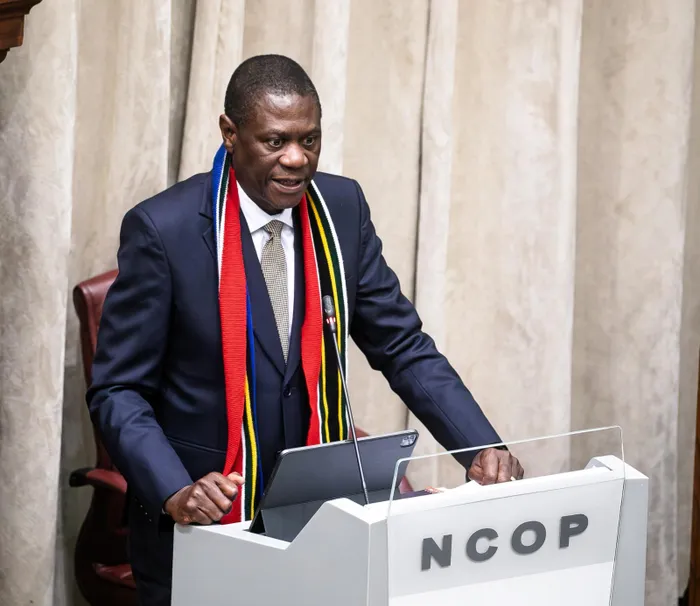
Image: Zwelethemba Kostile/ParliamentofRSA.
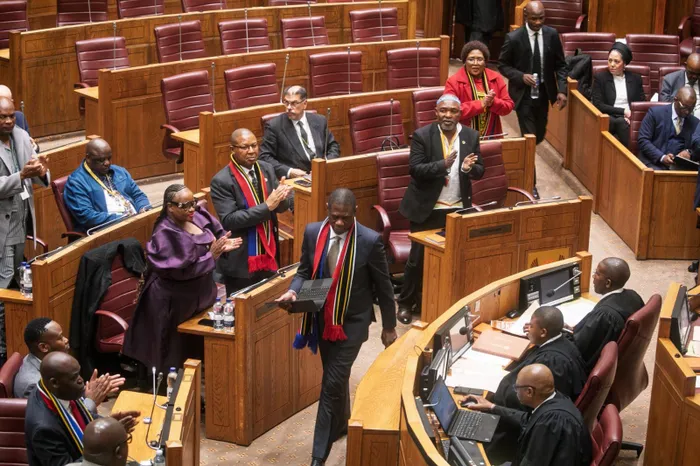
He also defended the Justice Crime Prevention & Security (JCPS) Cluster, saying that it is not a department, and that they were not able to sniff out wrongdoing.
“The JCPS is a forum where we bring together all the security forces, the security clusters, as we say. Where they give us their reports, their plans, and what they do. It’s a mechanism to ensure accountability, that we know that work is happening, and we are able to intervene if there are challenges. We are not the department.
“So, if there is a failure, that means the failure is in the department. Not in the JCPS. Now, you will know that one thing that has come out of the Madlanga Commission is that the JCPS could not have detected some of these learning challenges,” Mashatile said.
“If those who are in charge of the services at the top level are involved. Because those are the people who bring you the reports. So if those who are at a high level bring their reports and say, ‘We are doing this work, and we’re doing it very well,’ and so on, we don’t have a mechanism to go beyond that, because we are not a department.
“Of course, we are now looking at how we can strengthen that. The good thing is that once people are exposed, like the Madlanga Commission is doing, it means those people must be removed.”