




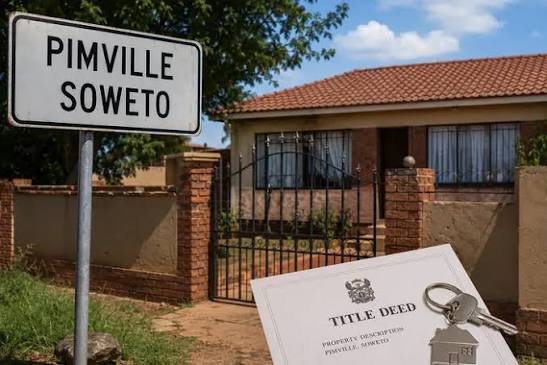
A man who returned to his late brother’s Soweto home after serving 16 years in prison has lost his High Court bid to strip his brother’s children of ownership of the property after a judge found they were its lawful heirs.
The South Gauteng High Court in Johannesburg dismissed an application brought by CL, who sought to cancel the title deed for the Pimville property and transfer ownership to the heirs of his late parents instead of the children of his deceased brother, YL. The court also ordered CL and his two sisters, who joined him as applicants, to pay the legal costs of the application.
In the application, CL argued that the property had originally been allocated to his late parents under the apartheid-era Regulation 7 permit system and that the subsequent registration of the title deed in the names of his late brother, YL, and his wife, FL, had been unlawful.
He also asked the court to declare FL’s will invalid, arguing that because his parents had died without leaving wills, the property should have devolved to all their heirs under the law of intestate succession.
However, his niece, EL, opposed the application, telling the court that her parents had lawfully purchased the property from the City of Johannesburg for more than R1,700 after her grandparents relocated to Alexandra in 1987. She said her parents remained at the property, paid all municipal rates and service charges, and later became the registered owners.
EL also revealed that her uncle had been imprisoned from 2004 until his release in 2020. After leaving prison, he asked her parents if he could live in a back room on the property, claiming he could not return to Alexandra after being convicted of killing a member of the community. She further alleged that CL later became abusive towards her, prompting her to obtain a protection order against him.
Acting Judge Professor Taki Madima found that the evidence proved that the late YL had lawfully acquired ownership of the property after purchasing it from the municipality under legislation designed to convert apartheid-era land tenure rights into full ownership.
The court further noted that YL had lived at the property continuously, paid all the required municipal levies and service charges, and lawfully obtained ownership. Upon his death without leaving a will, his estate devolved to his widow, FL, and their children. FL later executed a valid will leaving the property to her two children.
Judge Madima described FL’s will as valid, properly signed and witnessed, noting that it expressly revoked any previous testamentary documents before leaving the house and its contents in equal shares to her two children.
In rejecting the application, the judge also considered CL’s return to the property after his imprisonment, finding that it did not give him any legal entitlement to ownership.
“The first applicant’s return after serving a jail term does not entitle him to claim the property as belonging to his parents, who left Pimville for Alexandra,” the judge said.