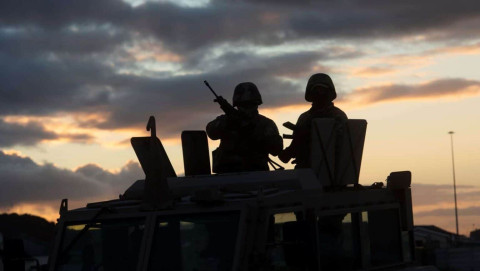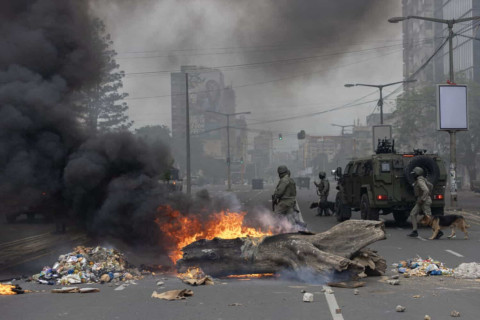




There are moments when the world seems to be moving toward peace and war simultaneously.
This is one of them.
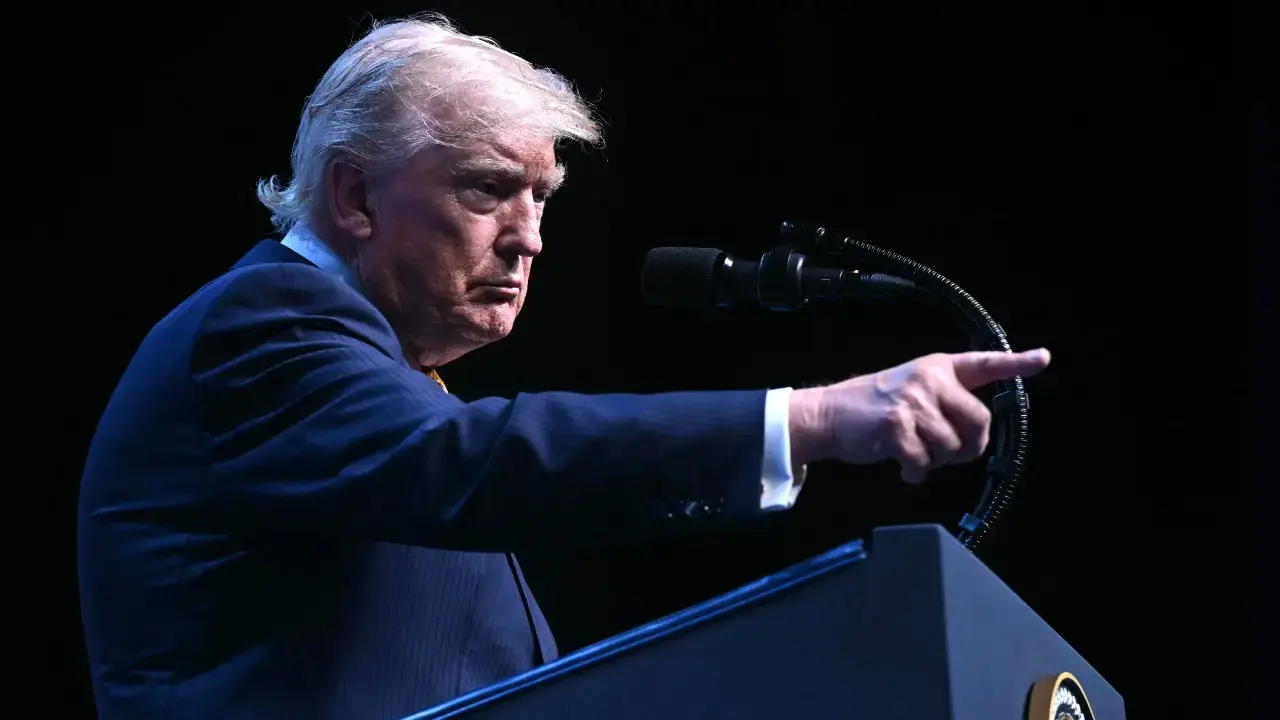
President Trump continues to express hope that the conflict with Iran can be brought to an end. Iran and Oman say negotiations over shipping arrangements in the Strait of Hormuz are progressing.
That is encouraging, but the moment remains fragile.
Iran continues attaching significant conditions to reopening and stabilising the Strait. So diplomats are searching for an exit while military forces throughout the region remain prepared for another round of confrontation.
That is the fog of war: hope in one headline, escalation in the next.
The contradiction extends to Yemen, where Iran-aligned Houthi forces remain capable of threatening Saudi interests and international shipping routes.
One spark can touch several alliances.
That is why progress must be measured by actions, not announcements. Diplomats negotiate while generals prepare contingencies. Political leaders speak of peace while military planners prepare for negotiations to fail.
America must do the same.
But Washington can no longer ignore another reality: Modern warfare consumes sophisticated weapons at astonishing speed.
Recent reporting has raised serious questions about American inventories of Patriot and THAAD missile-defence interceptors, Tomahawk cruise missiles and other precision weapons after months of conflict.
America remains the most powerful military nation on Earth. But even the strongest military cannot consume advanced weapons indefinitely without confronting production times, supply chains, industrial capacity and cost.
That is not an argument for weakness.
It is an argument for strategic discipline.
Strength means possessing the ability to wage war while understanding which wars are necessary, what objectives justify them and when diplomacy better serves the national interest.
Europe faces a different danger.
Countries along NATO’s eastern flank increasingly worry that Russia could test the alliance through something deliberately ambiguous a drone incident, cyberattack, infrastructure sabotage, false-flag operation or limited provocation.
The objective might not be territorial conquest.
It might simply be to ask one dangerous question:
Will NATO really defend every inch of NATO?
The greatest danger is miscalculation. History reminds us that wars are not always deliberately chosen. Sometimes nations stumble into them because each side assumes the other will retreat.
And Russia’s war increasingly reaches beyond Europe. Ukraine’s President Volodymyr Zelensky now says North Korea could deploy another 30,000 to 50,000 troops to Russia, potentially giving Pyongyang invaluable modern combat experience while deepening the military relationship between two nuclear-armed states.
Then there is South Africa, a country that reminds us that geopolitical conflict is no longer defined only by missiles and armies.
Washington and Pretoria remain important partners, yet their relationship is strained by disagreements over trade, foreign policy and South Africa’s controversial Expropriation Act.
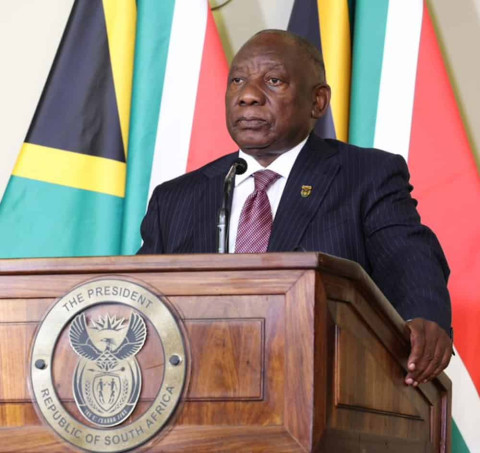
The Democratic Alliance, itself part of South Africa’s governing coalition, is now challenging that law in court. Critics argue that provisions allowing expropriation without compensation in limited circumstances threaten property rights and investment. President Cyril Ramaphosa’s government argues that the legislation is necessary to address the profound racial inequalities in land ownership inherited from apartheid.
Meanwhile, the United States has imposed a new 12.5% tariff on certain South African exports over concerns involving enforcement against goods produced with forced labour. Pretoria says it will continue negotiating with Washington.
South Africa is therefore navigating a difficult question familiar to many emerging powers: How does a nation maintain its sovereignty and historical identity while preserving relationships with competing global powers?
America should resist forcing every country into a binary choice between Washington and its adversaries. South Africa, in turn, should recognise that genuine friendship with the United States requires candid conversations when our interests and values diverge.
Diplomacy matters most when friends disagree.
Migration presents another form of instability.
Recent events in Ceuta, Spain’s small territory in North Africa, demonstrate how quickly economic desperation, political instability and misinformation can overwhelm borders.
Not every national-security crisis begins with missiles.
Nations have every right and responsibility to control their borders. But security and human dignity cannot become opposing principles. A civilised society must defend both.
Another transformation receives too little attention: the democratisation of warfare.
Ukraine demonstrated how inexpensive drones can destroy equipment worth millions, conduct surveillance and fundamentally alter battlefield tactics.
Now those technologies are spreading.
Armed groups in Colombia have increasingly experimented with weaponised civilian drones. Technology perfected on one battlefield does not remain there.
It migrates.
Today’s battlefield innovation can become tomorrow’s terrorist, cartel or homeland-security threat.
Yet amid this instability, Venezuela reminds us that political change does not always require warfare.
Opposition leaders continue demanding restored democratic institutions, political freedoms and credible elections. Dialogue matters, but dialogue without genuine political competition is insufficient.
Eventually democracy comes down to something remarkably simple:
Let the people choose.
What connects Iran, Yemen, Russia, South Africa, Europe, Colombia and Venezuela is not geography or ideology.
It is uncertainty.
The international order is being tested from multiple directions. Alliances are under pressure. Military inventories are strained. Drones are transforming warfare. Trade disputes increasingly become geopolitical weapons. Governments struggle with legitimacy while regional conflicts threaten to widen.
And yet diplomacy continues.
That matters.
We should never confuse optimism with naïveté. A ceasefire is not peace. Negotiations are not reconciliation. Progress announced today does not guarantee tranquility tomorrow.
But cynicism cannot become foreign policy either.
Peace almost always begins while distrust still exists.
Political leaders make the announcements. Ordinary people live with the consequences.
Families bury the dead. Soldiers carry the wounds. Workers lose jobs when trade collapses. Refugees leave their homes. Parents wonder whether their children will inherit another war.
Through this fog, our objectives must remain clear:
Strength without recklessness.
Diplomacy without naïveté.
Deterrence without endless warfare.
Sovereignty without isolation.
And hope without illusion.
Because peace is not what governments announce today.
Peace is what survives tomorrow.