




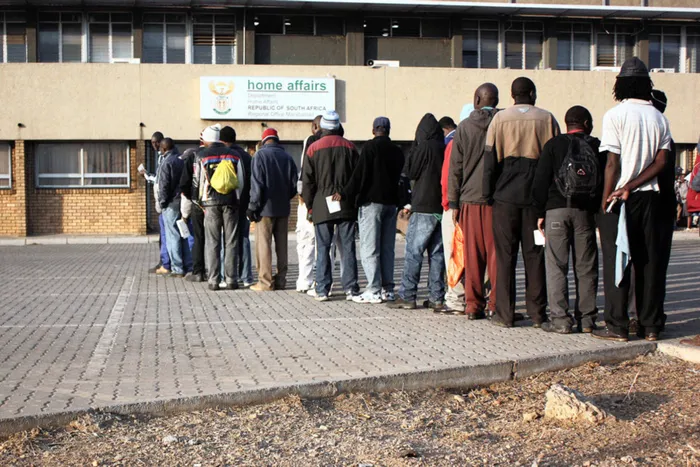
The Director-General of the Department of Home Affairs has withdrawn the directive that his office had issued on 28 September regarding the intake of asylum seeker applications.
This decision follows a July 7 Constitutional Court judgement in the matter between the Scalabrini Centre of Cape Town and the Department of Home Affairs. The landmark judgement, by judge Steven Majiedt ruled that asylum seekers and their children could not be excluded totally from refugee status due to procedural failures.
The court judgment had challenged the Constitutionality of the current procedure, which is under the Refugees Act of 1998. According to the Act, asylum seekers are required to
enter South Africa through a designated port of entry, where they will receive an asylum transit visa, valid for five days. Additionally, the Act says asylum seekers must within five days present themselves at a Refugee Reception Office (RRO).
Soweto and Durban were brought to a standstill as angry residents clashed with foreign nationals, torching vehicles belonging to foreign nationals and government infrastructure. The revolt was criticism of the directive by Home Affairs.
On Friday morning, Home Affairs said the directive was originally issued to all Refugee RROs, as a purely operational attempt to support the implementation of the Court’s order without the knowledge of the Minister of Home Affairs.
The way forward
“Claims that it was a politically-motivated decision are therefore categorically untrue, as the directive emanated from a Constitutional Court case that the Department had opposed,” said Home Affairs in a statement.
“The department also admitted that their attempt to practically implement the judgement immediately led to serious consequences that could not have been foreseen in the Court order.
“This includes, amongst others, the fact that RRO operations were overwhelmed within a matter of days since the directive was issued, Home Affairs officials were placed at risk, and that serious threats to public safety and order had emerged,” said Home Affairs.
They said as a way forward, the Department will embark on a fresh process to determine the most appropriate operational approach to ensure compliance with the Constitutional Court’s order.