



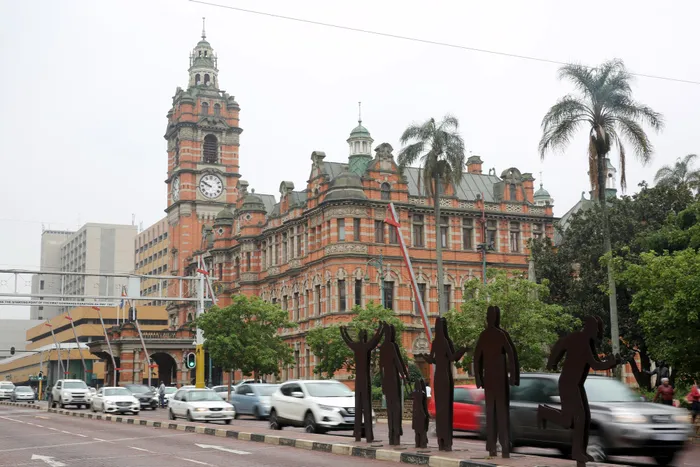
The ANC, DA and IFP have enough seats to form a coalition government in Msunduzi Municipality, potentially keeping the MK Party out of power despite it emerging as the largest party in the council in the 2026 Local Government Elections.
The three parties have a combined 41 seats in the 81-member council, giving them the exact number needed for an outright majority. The MK Party secured 31 seats and would need the support of other parties to govern.
University of KwaZulu-Natal political analyst Dr Siyabonga Ntombela said the Government of National Unity (GNU) arrangement could influence coalition negotiations in Msunduzi, with the ANC, DA and IFP potentially replicating their national partnership at municipal level.
“Looking at the numbers, the GNU influence might persuade the ANC, DA, and IFP to collude to mirror the national arrangement,” he said.
The ANC and DA each won 17 seats, while the IFP secured seven. The Independent Councillors grouping won three seats, with another seat going to an independent councillor. ActionSA, the Afrika Mayibuye Movement, EFF, Freedom Front Plus and South African Communist Party (SACP) each secured one seat.
MK Party appoints national team to oversee coalition talks
The MK Party has appointed a seven-member National Negotiations Team to lead coalition discussions across municipalities following the elections.
The team, appointed by party president Jacob Zuma, comprises First Deputy President Duduzane Zuma, Second Deputy President Tony Yengeni, National Chairperson Mxolisi Phakathi, Acting Secretary-General Lindiwe Mtshali-Makhubu, KwaZulu-Natal convenor Willies Mchunu, Advocate Dali Mpofu and former treasurer-general Dr Thanti Mthanti.
Mpofu, who also chairs the party’s National Disciplinary Committee, announced the appointments during a media briefing at the Electoral Commission of South Africa’s KwaZulu-Natal Results Operations Centre on Saturday.
The team will engage prospective coalition partners, assess political and policy alignment, and make recommendations on governance arrangements and the distribution of executive responsibilities. The party’s presidency retains the final authority to approve or reject proposed agreements.
The MK Party identified the ANC, IFP, ActionSA, EFF, African Transformation Movement and SACP among the parties it was prepared to engage.
However, Mpofu ruled out working with the DA, which has also indicated that it is not prepared to enter into an arrangement with the MK Party.
“The DA has come right out that they are not prepared to work with us. So we are going to be engaging parties that are likeminded, that share the same values, the same ideology as us and with the same interests in terms of what we seek to achieve,” he said.
Ntombela said the DA’s position, along with concerns about the MK Party’s organisational structures, could complicate its coalition negotiations.
“Several parties, like the DA, vouched not to work with MK because of internal instabilities and the absence of foundation party documents like the manifesto and constitution. This is what could prevent these parties (from working together),” he said.
Zuma’s position could influence ANC-MK coalition
Ntombela said the relationship between Zuma and President Cyril Ramaphosa could also influence whether the MK Party considers working with the ANC.
Ramaphosa defeated Zuma’s preferred candidate, Nkosazana Dlamini-Zuma, in the ANC’s 2017 leadership contest before succeeding him as president in February 2018.
“If Zuma will dictate how these coalitions are constituted, I do not see him agreeing to work with the ANC and DA. He maintains that this is the ANC of President Ramaphosa; therefore, he will demand that Ramaphosa resigns first before collusion,” Ntombela said.
However, he suggested that the MK Party’s elected councillors might take a different approach from the party’s leadership.
“If it is left to MKP councillors, they might work with the ANC comrades who won,” he said.
He also said an MK Party-IFP partnership was possible, although the party might have to consider the positions of its partners in the GNU and KwaZulu-Natal Government of Provincial Unity.
“The MKP might be willing to work with the IFP and I do not see it resisting, but it might have to consider how the GNU and GPU partners feel,” he said.
An ANC-MK Party coalition would command 48 seats in Msunduzi, while an MK Party-IFP partnership would have 38, three short of a majority.
IFP appoints coalition negotiating team
The IFP’s National Executive Committee (NEC) on Monday appointed an eight-member Coalition Negotiating Team to lead and oversee the party’s coalition discussions.
The team will be convened by National Chairperson Blessed Gwala and includes Deputy National Chairperson Thembeni kaMadlopha-Mthethwa, Secretary-General Siphosethu Ngcobo, Deputy Secretary-General Albert Mncwango, Treasurer-General Narendh Singh, KwaZulu-Natal Chairperson Thamsanqa Ntuli, Gauteng Provincial Chairperson Bonginkosi Dhlamini and National Spokesperson Mkhuleko Hlengwa.
In a statement, the party said its approach would be guided by its principles, electoral mandate and commitment to good governance.
The IFP said its 2026 Local Government Elections Manifesto would form the policy foundation for negotiations, with a focus on stable administrations, service delivery, financial accountability, clean governance and local economic development.
It also said it wanted agreements based on clear commitments, shared priorities and mutual accountability, rather than the pursuit of political positions.
ActionSA and DA outline their negotiating positions
ActionSA KwaZulu-Natal leader Zwakele Mncwango told IOL he would lead the party’s negotiating team in Msunduzi, eThekwini, Newcastle, KwaDukuza and uMhlathuze.
ActionSA secured one seat in Msunduzi. Mncwango said the party would assess potential coalition partners according to the circumstances in each municipality.
“We may work with one party in one municipality and another party in a different municipality,” he said.
DA KwaZulu-Natal leader Sthembiso Ngema said the party wanted a co-ordinated approach to coalition negotiations, with its Federal Executive assessing potential partners across provinces before making recommendations.
“The Federal Executive has stated that it does not want a situation in which we deal with many small parties in different areas. Instead, it would prefer to identify several parties in different areas that we could work with.
“We will assess the parties in the different provinces and recommend to the Federal Executive those we believe can work with us,” he said.
The results represent a significant shift in Msunduzi’s political landscape. In the 2021 Local Government Elections, the ANC won 40 seats in the 81-member council, one short of an outright majority. The DA secured 16 seats, the EFF 10 and the IFP eight.