



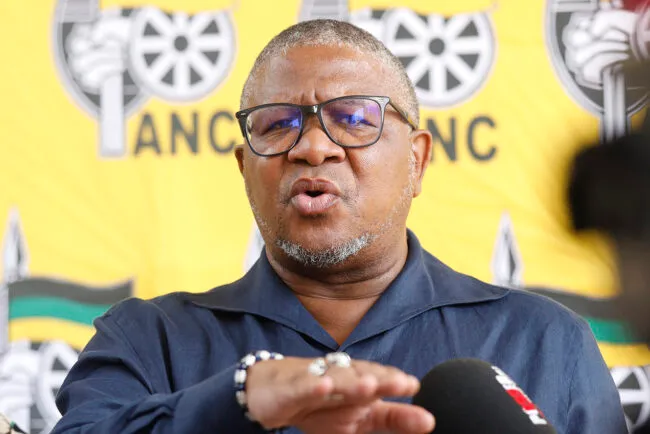
The African National Congress (ANC), an organisation founded in 1912 and once regarded as the heartbeat of South Africa’s liberation struggle is today confronting the consequences of years of political arrogance, poor leadership and a growing disconnect from the people it was established to serve. Since Cyril Ramaphosa assumed the presidency in 2018, the organisation has steadily lost the trust of millions of South Africans. The warning signs were evident in 2019, they became impossible to ignore in 2024, and have now reached another defining moment in the 2026 local government elections. From commanding 62.15% of the national vote in 2014, the ANC fell to 57.5% in 2019 and 40.2% in 2024. Its support has declined further to 31% in the latest local government elections.
This is not merely an electoral setback; it is a profound rejection of a governing movement that appears to have forgotten its own people.
The cracks within the ANC however did not begin recently; their roots can be traced to the December 2017 elective conference, where allegations of money being used to influence delegates and buy political support became a subject of fierce internal contestation.
Allegations of financial influence were repeatedly raised by factions within the organisation, including those opposed to Ramaphosa’s rise to power. What followed was a gradual erosion of the ANC’s established internal democratic culture. The organisation’s policy conferences, National General Council (NGC) meetings and traditions of branch-led decision-making appeared to lose their former prominence. The NGC, traditionally an important mechanism for reviewing progress and holding leadership accountable between national conferences, did not convene during Ramaphosa’s first eight years in office. The introduction and application of the controversial ‘step-aside rule’, which resulted in the removal of Ace Magashule from his position as secretary-general further deepened divisions, with critics viewing it as a mechanism used selectively against political opponents. The arrest of the ANC former President Jacob Zuma in 2021 raised eyebrows and caused more divisions in the ANC.
These developments, alongside persistent allegations of financial impropriety and growing concerns about the absence of accountability at the highest levels, contributed to an organisation increasingly divided against itself. Instead of strengthening its internal democratic processes, the ANC appeared to weaken the very structures that had once given its branches a meaningful voice. The warning signs were there from the beginning: An organisation that abandons its own processes, marginalises its members and fails to hold its leadership accountable eventually begins to lose its identity, its unity and ultimately, the confidence of the people.
Growing dissent
For years, South Africans have raised their voices about unemployment, poverty, crime, corruption, illegal immigration, collapsing municipalities and deteriorating public services.
Communities have protested over water shortages, electricity failures, poor roads, dysfunctional hospitals and clinics, and the absence of meaningful economic opportunities.
Yet, instead of demonstrating the urgency required to address these challenges, the ANC leadership increasingly appeared consumed by internal political battles, factionalism and the pursuit of political survival. Perhaps one of the most troubling features of this period has been the perception of a sustained witch-hunt against political opponents and dissenting voices.
Individuals who challenged the leadership, held opposing views or were considered potential future leaders often found themselves embroiled in political and institutional battles.
Allegations of the use of law enforcement and judicial processes to settle political scores raised serious questions about the independence of state institutions and the health of democracy. Rather than building an organisation that welcomed robust debate and accountability, the leadership appeared increasingly intolerant of criticism.
Governance failures laid bare
The consequences of these failures are reflected in the country’s economic and social realities. Unemployment remains one of South Africa’s greatest national emergencies, crime continues to devastate communities, and public confidence in law enforcement has been severely undermined. Hospitals and clinics face infrastructure, staffing and resource challenges, while municipalities struggle to deliver even the most basic services. The country needed leadership focused on economic growth, job creation, affordable fuel, public safety and functioning infrastructure. Instead, the political landscape became increasingly dominated by disputes, political rivalries and the marginalisation of those who dared to disagree.
Had the same energy been directed towards tackling unemployment, crime, the cost of living and service delivery, South Africa might be telling a very different story today. Citizens who demanded answers were too often met with political defensiveness, dismissiveness and, in some instances, heavy-handed responses from law enforcement.
The growing perception was that protecting political power had become more important than improving the lives of ordinary South Africans. The electoral figures tell a story that political speeches can no longer conceal. In 2024, the ANC lost its parliamentary majority for the first time since 1994, forcing it into a Government of National Unity. The subsequent decline in local government support has further exposed the extent of its weakening political influence. This is the electorate speaking through the ballot box.The people are no longer prepared to offer unconditional loyalty based on the history of a liberation movement. Liberation credentials cannot forever compensate for poor governance, and political slogans cannot replace functioning hospitals, employment opportunities, safe communities and reliable municipal services. The ANC did not need an opposition party to destroy its dominance; years of internal failures, factionalism, arrogance and neglect have brought it to this point.
A sombre warning
The decline of the ANC should serve as a warning to every political organisation and every leader who may one day occupy public office.
No organisation, regardless of its history, liberation credentials or political influence is too powerful to fall. The ANC survived decades of oppression and led the struggle for a democratic South Africa, yet it failed to appreciate that the greatest responsibility of leadership is not to demand loyalty from the people, but to earn it through service, accountability and results.
When leaders stop listening, communities eventually stop believing; when they stop serving, voters eventually stop supporting. The ANC is learning a painful lesson, that an organisation can survive its enemies, but it may not survive its own leadership. The people gave the ANC a mandate to liberate them, not to govern them into another generation of disappointment. History may remember how the ANC liberated South Africa, but future generations will also judge how it squandered the trust of the very people who gave it power.