



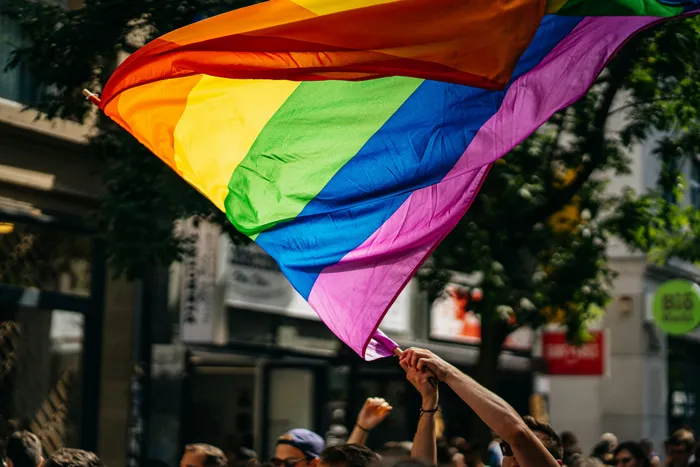
As we commemorate Pride Month, LGBTQIA+ (lesbian, gay, bisexual, transgender, queer/questioning, intersex, and asexual) organisations have highlighted the challenges faced by the community, while two members of the LGBTQIA+ community have shared their journeys.
IN A NATION celebrated for one of the world’s most progressive constitutions, the lived realities of South Africa’s LGBTQIA+ community tell a different story.
Brian Sibeko-Ngidi, the director of Uthingo Network (formerly known as the Gay and Lesbian Network), said South Africa had one of the most progressive constitutions in the world and was the first country in Africa to prohibit discrimination based on sexual orientation.
He said, however, there remained a significant gap between legal protections and lived realities.
Sibeko-Ngidi said the LGBTI+ community continued to face hate crimes and violence including physical assault, sexual violence, and murder.
“They also face family rejection and homelessness, particularly among LGBTQIA+ youth. Bullying and discrimination in schools and universities are also of concern, while there is also workplace discrimination and barriers to employment.
“There is also stigma within healthcare settings, which can discourage people from accessing essential health services. Online harassment, hate speech, and misinformation is a major problem,” he said.
Sibeko-Ngidi said that in recent years, there had been growing visibility and acceptance of LGBTQIA+ people in some sectors of society.
However, he added that there had also been a rise in anti-LGBTQIA+ rhetoric globally, often linked to organised anti-rights movements.
“South Africa is not immune to these trends. Social media has amplified hateful narratives. Many LGBTQIA+ people report feeling increasingly targeted by misinformation and moral panic campaigns. The prejudice may not always be more visible in public spaces than before, but it has become more organised and more vocal in some sectors.”
Sibeko-Ngidi said the impact on LGBTQIA+ individuals who experienced discrimination and violence, could be devastating.
“Survivors often experience anxiety, depression, post-traumatic stress, social isolation, suicidal thoughts, loss of self-esteem, and difficulties trusting others. Some lose access to education, employment opportunities, housing and family support.”
He added that fear remained a daily reality for many LGBTQIA+ people in South Africa.
“Many individuals constantly assess whether it is safe to hold a partner’s hand in public, express their gender identity openly, come out at work, school, or within their family, and access health care without facing discrimination.
“Living under these conditions creates what psychologists refer to as ‘minority stress’ – the chronic stress experienced by people who belong to marginalised groups. The consequences can include anxiety and depression, social withdrawal and isolation, lower self-esteem, substance misuse as a coping mechanism, iIncreased risk of self-harm and suicidal thoughts, and difficulty building healthy relationships and support systems.
“Research consistently shows that LGBTQIA+ people experience better mental health outcomes when they are accepted, affirmed, and able to live authentically. Conversely, rejection and discrimination can have severe and lasting consequences,” he said.
Sibeko-Ngidi said equality on paper was not enough.
“While South Africa’s Constitution protects the rights of LGBTQIA+ people, true equality can only be achieved when these rights are respected in homes, schools, workplaces, places of worship, healthcare facilities, and communities. No one should have to choose between their safety and being themselves.”
He said LGBTQIA+ people were not asking for special rights.
“They are asking for the same dignity, safety, respect, and opportunities that every person deserves. Diversity has always been part of South Africa’s story. Building a society that values everyone, regardless of sexual orientation, gender identity and expression and sex characteristics, strengthens our democracy and our humanity.”
Sibeko-Ngidi said his message to the LGBTQIA+ community was to remember, “you belong”.
“Your identity is valid, your life has value, and you deserve to live openly and safely. While prejudice and discrimination still exist, there are organisations, allies, families and communities working every day to create a South Africa where everyone can thrive. You are not alone, and your visibility and resilience continue to inspire positive change for future generations.
“The struggle for LGBTQIA+ equality is not only an LGBTQIA+ issue. It is a human rights issue, and the responsibility for creating a more inclusive society belongs to all of us,” he said.
Daniel Chettiar, founder of the DSK Group, a non-profit organisation, said hate, discrimination and crime against the LGBTQIA+ community had grown over the years.
“You would think that in 2026, society would be more open-minded and accepting. However, that is not the case. Individuals from the LGBTQIA+ continue to face the same prejudice that they did 20 years ago.”
The organisation was initially founded to assist the LGBTQ+ community, but have since extended the victims of gender-based violence across the country.
Chettiar said the organisation assisted eight LGBTQIA+ individuals in finding a place of safety in the past month.
“Five men and three lesbians approached us for help because they faced abuse in their homes due to their sexuality. They were being beaten by their parents or siblings. However, they are the lucky few that are able to escape. Some are killed, and in other instances they kill themselves as they cannot handle the pressure.
“Another challenge for the LGBTQIA+ community is discrimination when seeking employment. If you look or ‘act’ different, then you can forget about getting a job. If you do get a job, then you have to deal with bullying by colleagues. This can greatly impact a person’s mental health,” he said.
Chettiar said society needed to be more accepting.
“Just recently, I was doing an interview with a radio station, and it was shown live on social media. In the comment section, a man said: “Put petrol and burn yourself”. It is sad that people still think in such a hateful way. However, the LGBTQIA+ community is not asking for anyone’s approval. We are just saying ‘accept us’. We are not getting in anyone’s way. We are just living our lives as we choose too. The focus should be standing together and fighting against other crimes such as gender-based violence in our country,” he said.
Mogau Makitla, the media and communications officer for GALA Queer Archive, said fostering inclusive societies was important.
“Members of the LGBTQIA+ community exist across all races, cultures, religions and socio-economic backgrounds. We are your neighbours, your church mates, we are everywhere. Excluding LGBTQIA+ people means excluding our own families and communities.”
Makitla said one of the greatest challenges was aligning the Constitution with people’s lived realities.
“The Constitution may say ‘everybody has a right to life’, but people get murdered in homophobic-fuelled hate crimes. What happens to the queer child who drops out of school due to bullying and harassment, despite having the right to an education? It is also important to note that the challenges faced by the LGBTQIA+ community are vast and diverse, often informed by intersecting factors.”
Makitla said, however, that significant progress had been made over the years to protect the LGBTQIA+ community, among others, through the enactment of the Hate Crimes and Hate Speech Act.
“Earlier this year, draft regulations for the Prevention and Combating of Hate Crimes and Hate Speech Act were opened for public comment. It has taken 10 years to reach this point, and we hope the Department of Justice will move swiftly to put effective implementation mechanisms in place across the country.
“We also need a justice system that works for the people. Implementation alone is not enough. We must also ensure that these mechanisms are accessible, adequately resourced, and consistently applied so that victims can seek justice and accountability.
“Our duty is to continuously assess how we treat vulnerable groups and to intentionally work towards fostering inclusive societies. As the GALA Queer Archive, we stand in solidarity alongside the LGBTQIA+ community, allies and all those working towards fostering inclusive societies,” she said.