



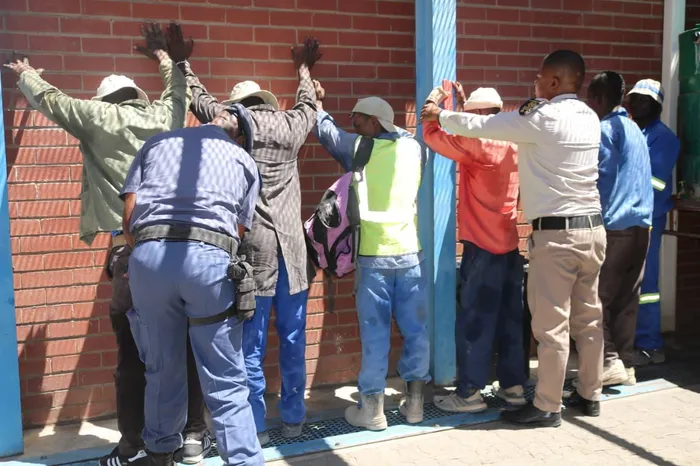
Deputy Minister Jomo Sibiya said the department planned to fine employers up to R100,000 for each undocumented worker hired, aiming to combat illegal migration in South Africa
The department also plans to recruit 10,000 labour inspectors to strengthen enforcement of South Africa’s labour and immigration laws.
The measures follow President Cyril Ramaphosa’s announcement on Sunday that the government would increase penalties, including imprisonment, for employers who violate the Immigration Act by employing undocumented foreign nationals.
Ramaphosa addressed the nation amid growing tensions over illegal immigration, recent protests targeting foreign nationals and calls for a nationwide shutdown on June 30 demanding that undocumented migrants leave the country.
The president outlined five measures to address immigration challenges:
-Intensifying arrests, inspections, prosecutions and deportations of undocumented migrants while increasing penalties for employers who hire them illegally.
-Strengthening border control through improved technology, infrastructure and personnel, and relocating refugee reception centres closer to border posts.
-Combating corruption, introducing biometric-based digital identification, phasing out green ID books and tightening identity verification systems.
-Reforming immigration and labour laws, introducing quotas for foreign workers and improving regulation of businesses and informal traders.
-Working with African countries and regional bodies to address the root causes of migration, including poverty, conflict and limited economic opportunities.
Speaking to Newzroom Afrika, Sibiya rejected suggestions that the new measures amounted to an admission that the government had failed to address immigration challenges over the years.
“I don’t think it would be correct to say we have failed. Yes, there have been challenges,” he said.
“This is where the president is acknowledging that there are gaps. As a government, we need to close those gaps. Some of the challenges we face today did not exist when many of our labour laws were originally developed.”
He said changing labour market conditions required legislative reforms.
“As the nature of work changes around the world, we need to reform our laws to meet current conditions. We are closing loopholes and moving faster to address these gaps. The National Labour Migration Policy and the Employment Services Amendment Bill are going to be game-changers.”
In his State of the Nation Address in February, Ramaphosa announced plans to recruit 10,000 labour inspectors.
Sibiya said the additional inspectors would significantly improve enforcement capacity.
“Since 1994, this is the first time we are recruiting inspectors on such a scale. We currently have only 2,300 inspectors across the country. They are doing the work, but the numbers are not enough.”
He said the inspectors would help identify employers who hire undocumented migrants to exploit them through cheap labour.
“We need more inspectors so that we can deal with employers who continue employing illegal foreign immigrants because they want cheap labour and higher profits.”
Responding to questions about the presence of foreign workers before 1994, Sibiya said the situation today differed significantly.
“Before 1994, workers from countries such as Mozambique and Malawi were recruited through formal agreements and were documented. What we are seeing now is different. People are entering South Africa illegally from across the continent and beyond.”
He said the government was working to close those gaps through labour reforms and cooperation with other African countries.
When asked whether the government had set specific deportation targets, Sibiya said the process would take time.
“This is not a one-day event. Recruiting inspectors does not happen overnight. Inspectors are highly trained professionals who must understand labour laws and systems.”
He said the Department of Employment and Labour’s role was to identify undocumented workers in workplaces, while deportations remained the responsibility of the Department of Home Affairs and the South African Police Service.
“Our responsibility starts and ends in the workplace. We identify those working illegally, then work with Home Affairs and SAPS to ensure the necessary legal processes are followed.”
Sibiya said the government was also working to introduce harsher penalties for employers.
“When we find employers hiring undocumented foreign nationals, we want the penalties to be severe. Some employers budget for non-compliance because current fines are not high enough.”
He said proposed amendments would introduce steeper fines and criminal charges against employers.
“We are looking at fines of around R100,000 per undocumented worker. If an employer has 500 undocumented workers, the penalty could be substantial. We want these fines to have a real impact.”
Sibiya argued that reducing demand for undocumented labour was critical to addressing illegal immigration.
“We must deal with the employers who create the demand. Many exploit undocumented workers by paying low wages, denying leave and making them work long hours.”
He confirmed that the recruitment process for the 10,000 inspectors had already begun.
“The process is in motion. We are starting recruitment, but we already have inspectors conducting enforcement operations every day.”
Sibiya said he would lead a major inspection and enforcement operation in one of the provinces on Wednesday.
“I have been in the Western Cape and KwaZulu-Natal conducting similar operations. Inspectors are working daily, but the numbers are not enough. We are expanding our reach so that even employers who think we will never find them will be inspected.”